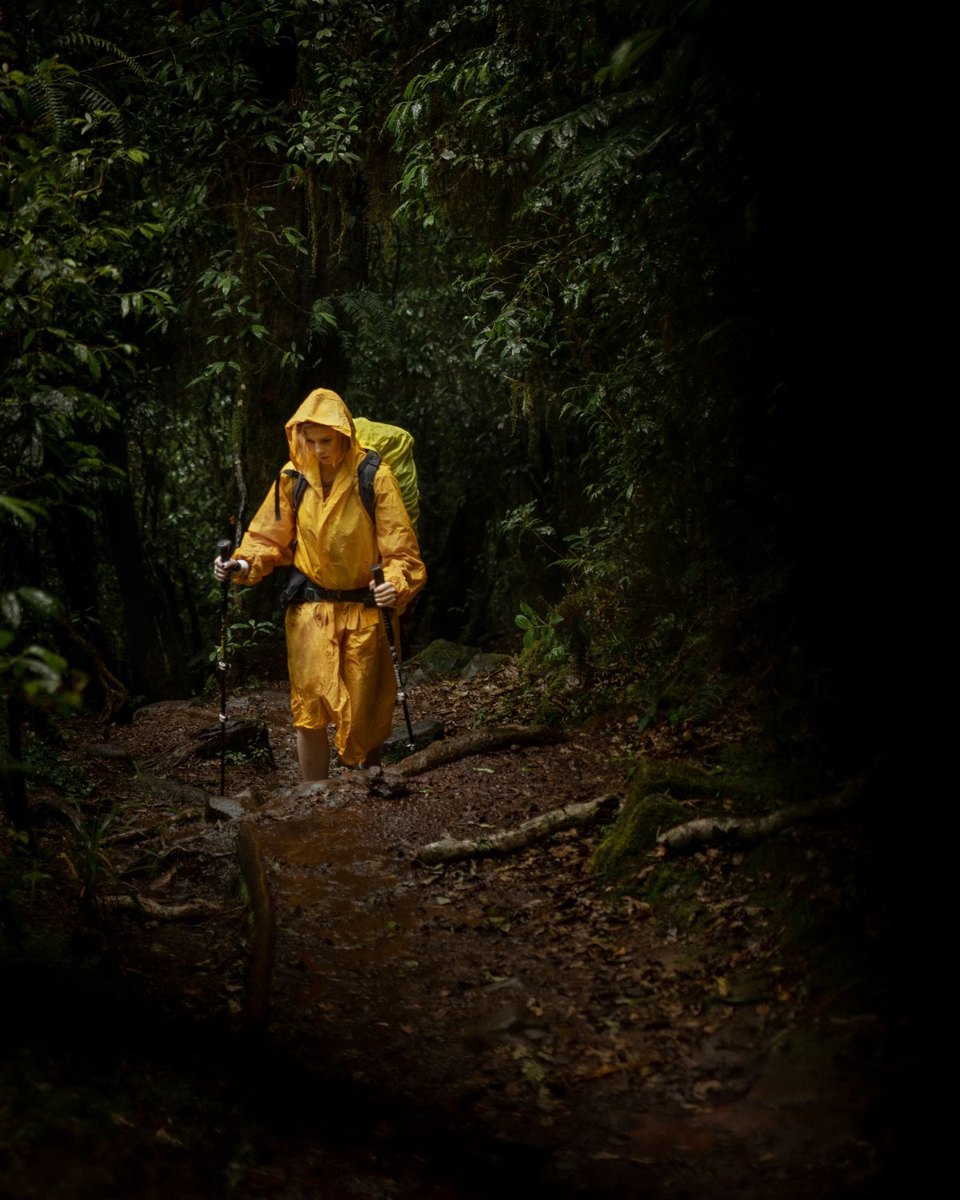
Trying a rain jacket over a thin shirt in a warm shop tells you only part of the story. On a walk, the same jacket may need to cover an insulating layer, fit under pack straps and let you see where you are placing your feet. Those ordinary movements are worth testing before buying.
Start with the conditions you expect. A layer for short walks close to buildings has a different job from one carried for a long, exposed outing. Read the manufacturer's description and care guidance rather than treating every fabric described as weather resistant as equivalent protection.
Check the moving fit
Wear the layers you expect to use underneath. Reach forward, lift your arms and bend down as though tying a shoe. Watch whether the hem rises too far or the shoulders pull tight. A larger size is not automatically better if it leaves loose fabric catching on equipment.
Adjust the hood and turn your head both ways. It should move well enough that looking sideways does not mean looking into the inside of the hood. Try the controls with the gloves you might wear. A tiny toggle that is manageable indoors may be frustrating in cold rain.
If you use a backpack, put it on during the fitting. Waist belts can cover jacket pockets, and shoulder straps may interfere with vents. Check that the front closure is accessible and that the jacket is not excessively bunched under the belt.
Manage warmth before clothing becomes soaked
Walking generates heat. Opening a vent, changing pace or removing an unnecessary layer early can be easier than trying to dry sweat-soaked clothing later. A waterproof shell does not remove the need to manage temperature, and a damp feeling inside does not by itself tell you whether rain or perspiration caused it.
Pack the rain layer where you can reach it promptly. Pulling it from the bottom of the bag means exposing other equipment while the weather worsens. Keep a separate dry layer protected inside the pack rather than assuming the jacket will solve every wet-weather problem.
After use, follow the care label for washing, drying and any recommended restoration treatment. Different coatings and fabrics need different care. Inspect closures and wear points before the next trip. If the forecast is beyond the protection or experience you have, change the outing; a new jacket is not a reason to keep a plan that no longer fits the conditions.