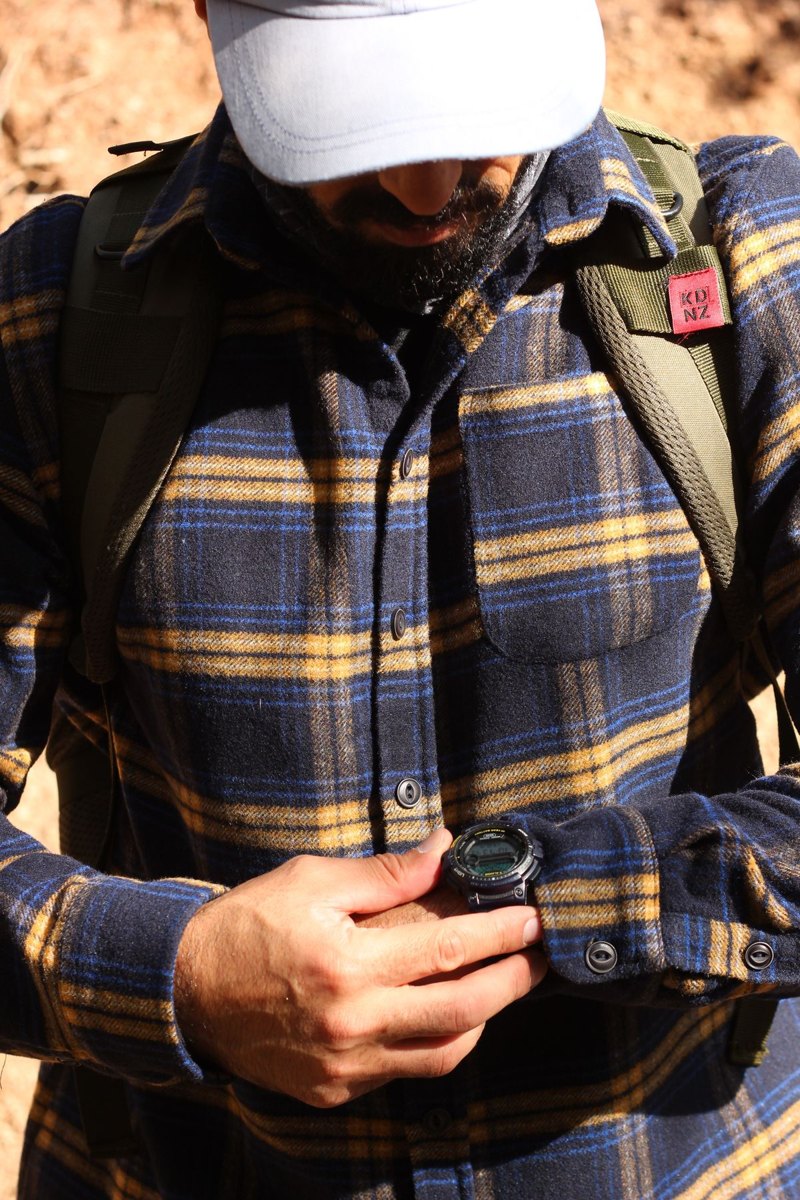
The halfway point of a hike is not always halfway through the effort. A steep descent, loose ground or tired legs can make the return slower than the outward walk. A turnaround time gives the group a decision made before the destination starts to feel too close to abandon.
Choose it while planning the route, not when someone first asks whether there is still time. The number should reflect the people actually going, the terrain and the day's conditions. A pace taken from a fitness app is not a promise that a mixed group will move at that speed.
Work backward from the finish
Identify when you need to be off the trail. Consider available daylight, forecast weather, transport connections and the distance from the trailhead to help. Leave room for food breaks, navigation and ordinary delays. Do not fill every available minute with walking and then call the result a margin.
Divide an unfamiliar route into recognizable stages. A junction, bridge or established viewpoint makes a better checkpoint than an arbitrary distance on a screen. Compare the time spent reaching the first stage with the time you expected. If the group is already behind, shorten the outing while the return remains straightforward.
Agree on what the time means
A useful rule is specific: at the agreed time, the group returns even if the viewpoint is still out of sight. Everyone should know the rule before leaving the parking area. It is harder to negotiate when one person is tired and another believes the destination is just around the corner.
The clock is only one limit. Worsening weather, uncertainty about the route, pain or a shortage of water may require an earlier return. A set turnaround time does not make it sensible to continue until that moment. In particular, hearing thunder calls for moving toward appropriate shelter, not finishing the next stage of the plan.
On a loop, turning around may stop being the shorter option. Understand the route's exit choices in advance, including whether a supposed shortcut is an actual maintained trail. Avoid inventing a cross-country escape because the plan has fallen behind.
At the end of the day, compare your estimates with what happened. Record where the pace slowed and whether the margin felt comfortable. Those notes help with the next trip without turning this hike into a competition. Reaching the car with energy and daylight left is a useful outcome, even when the summit stays on the map.