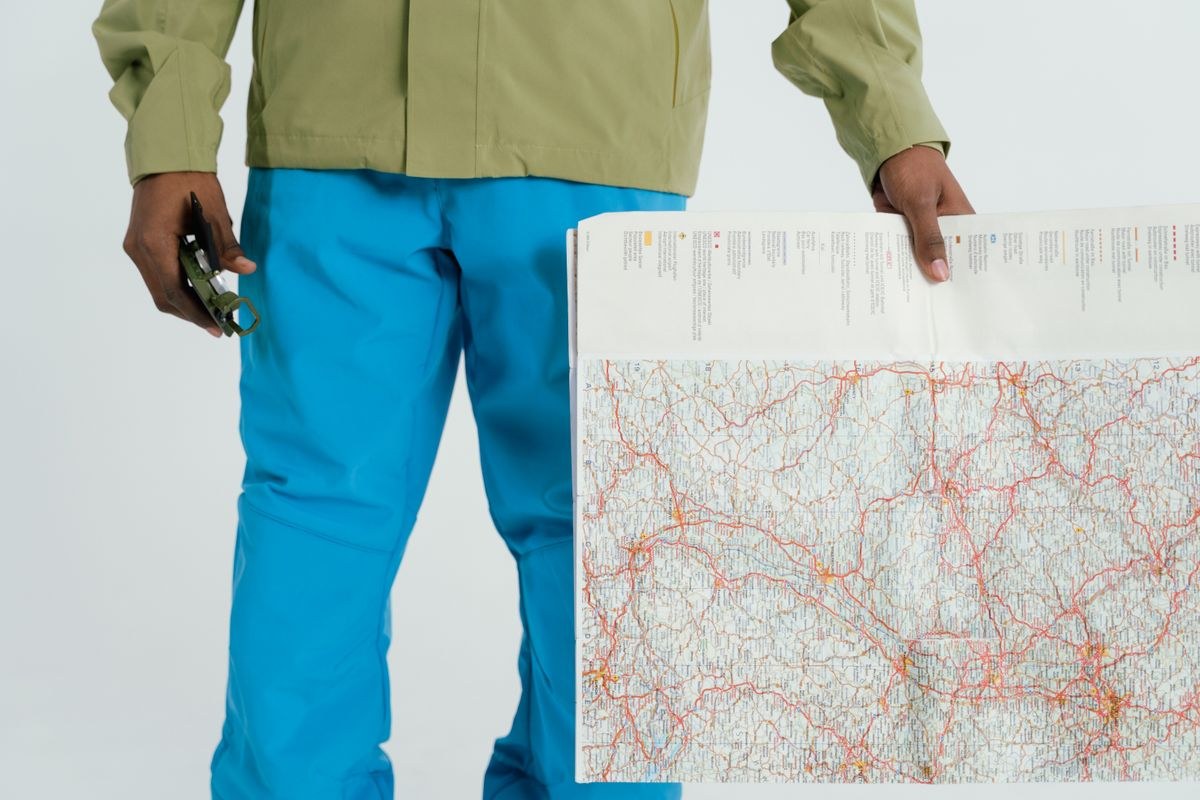
“Going hiking on Saturday” leaves a lot of work for the person who might need to help you. Which trailhead? Which direction? Was the plan a short loop or a full day on a ridge? A trip plan closes those gaps while you still have a map, a charged phone and time to think.
It does not have to be a formal document. An email, a printed page or a legible note can work. What matters is that someone who is staying behind has received it, understands it and has agreed to act on it. Sending a message into a busy group chat is not the same as arranging a contact.
Make the route recognizable
Use the actual trail names and trailhead location rather than your own nickname for the area. Include the intended direction around a loop and the place where you expect to finish. If you will park somewhere different from the starting point, explain that too. A map screenshot with a marked route can supplement the written details, but it should not be the only information available.
List the people going, the vehicle description and the phone numbers that might work. Give your contact the name and contact information of the agency responsible for the area. Look that up before departure, while you can distinguish the park office from an unrelated visitor business. An immediate emergency calls for emergency services rather than a message left in a general inbox.
Separate finishing from checking in
Your estimated finish time and your promised check-in time may be different. A remote parking area might have no reception, with coverage returning only later on the drive out. Explain that gap instead of leaving your contact to decide whether silence is normal.
Agree on what the contact should do if the check-in is missed. The National Park Service recommends trying to reach the party and contacting authorities if there is no response. Write down the agreed time and relevant numbers. Do not expect your contact to judge trail conditions from home or to conduct a search themselves.
A change of plan needs a message
Decide on a backup route before you leave and label it clearly. If you switch routes, update your contact when communication is available. A backup described on paper is not permission to wander through any nearby trail system without notice. When the planned update cannot be sent, consider whether changing the route will leave the people helping you with misleading information.
The final step is easy to overlook: tell the contact when the activity is finished. If you are stopping for dinner afterward, close out the hike first. A one-line arrival message prevents unnecessary worry and makes the arrangement easier to repeat next time. Keep the format you used, then replace the route, date and contact details for the next outing rather than reusing a stale plan unchanged.