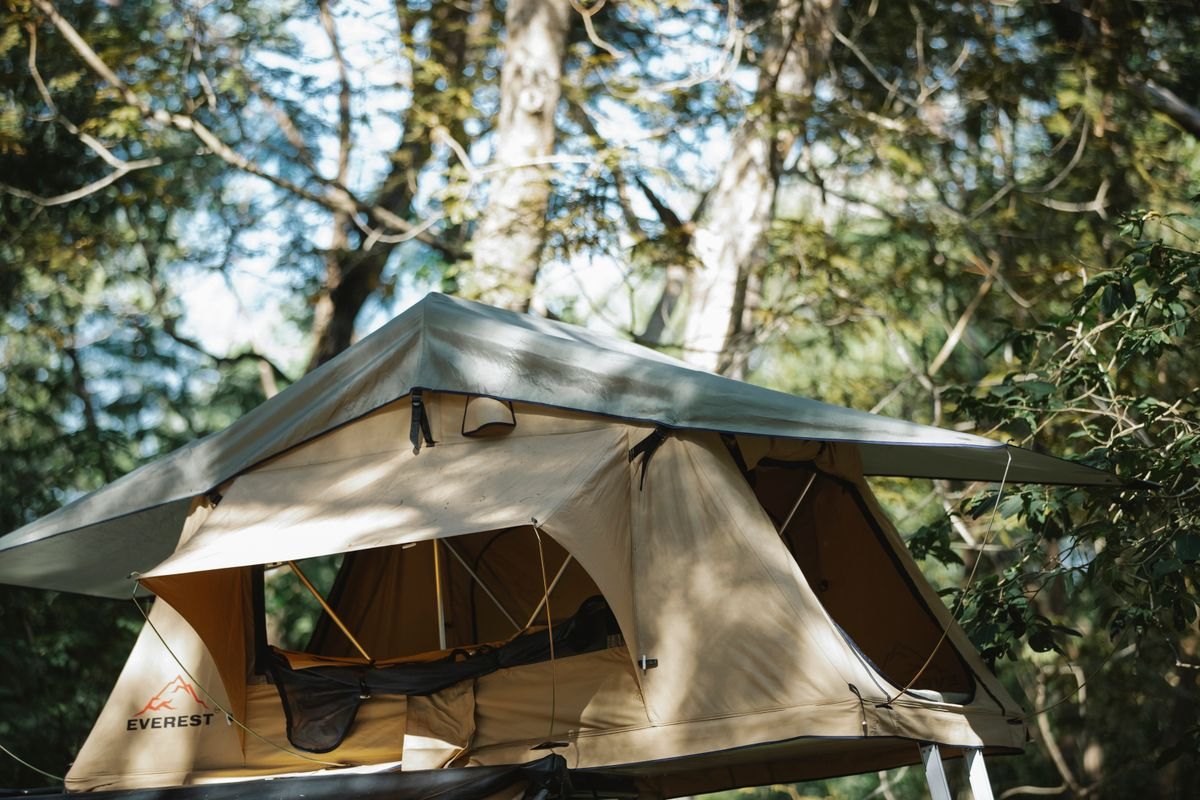
The flattest patch in a campsite is not always the best place to sleep. A shallow depression can collect runoff, and a clear strip across the ground may be a route that water takes during rain. Spend a few minutes walking around the site before unpacking the shelter.
Use designated tent areas where provided and follow the land manager's rules. At an established campground, the tent pad may already be arranged for drainage and to limit damage to vegetation. Do not expand it into neighboring plants to make room for a larger shelter.
Read the ground without rebuilding it
Look for puddles, soft mud, channels and debris caught in low areas. Consider the ground uphill from the tent as well as the immediate footprint. A site that appears dry now may receive water from a larger area when rain begins.
Do not dig trenches or move soil to make an unsuitable site work. Choose a permitted alternative or ask the host for advice. In areas where flash flooding is possible, local guidance matters more than a general preference for level ground. A dry streambed is not a convenient tent platform.
Look up as well as down. Damaged trees, loose branches and other overhead hazards can rule out a site that otherwise looks comfortable. Leave tree work to the people responsible for the area and move to a suitable location rather than attempting to fix a dangerous branch yourself.
Leave room for the rest of camp
Place the tent so its doors and guy lines do not block a common path. Identify the cooking and food-storage locations separately, following the site's wildlife and fire requirements. Keep a clear route to facilities and the place you would go if weather forced you to leave the tent.
After pitching, check the manufacturer's instructions for fly tension, ventilation and the groundsheet. A loose fly or poorly positioned footprint can create problems even on a well-chosen site. Keep equipment out of the entry so people can get in and out without stepping onto bags.
Check current weather and local alerts before settling in for the night. A tent is not protection from lightning or floodwater. If the conditions require a safer location, leave while the route is still usable. Choosing a campsite is one part of planning the night; it does not replace deciding when camping is no longer the right option.