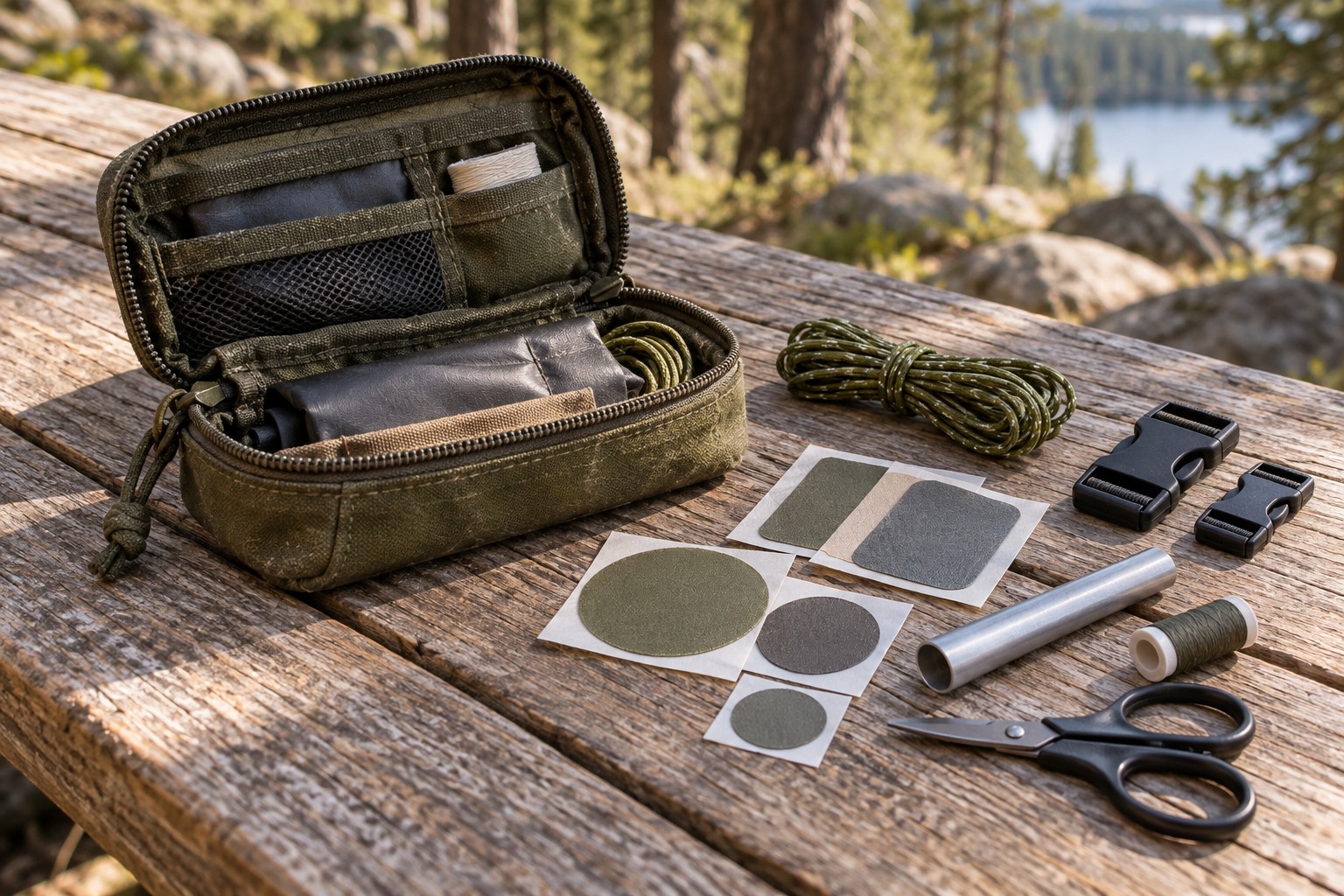
A repair pouch earns its place when its contents fit something you actually carry. A collection of impressive-looking tools is less useful if none fits the fastener on your stove or the fabric of your shelter. Start with the equipment list, not with an empty pouch to fill.
Read the care and repair guidance for the important items. Manufacturers may specify a patch material, adhesive or replacement part that is compatible with a coating or construction. A tape that sticks well to one surface can fail on another or complicate a later repair.
Pick a few realistic problems
Think about a torn stuff sack, a loose noncritical strap or a small puncture in an inflatable pad. Which problems can you address with the supplies and skills you have? Which would mean shortening the trip? Write down the distinction before relying on a repair kit as a universal solution.
Carry the correct patch or repair sleeve when the equipment maker recommends one. Check that adhesive has not dried out and that a sealed kit is still usable. Tiny accessories are easy to forget after a practice repair, so count them before the next outing.
Keep sharp points and blades protected. A needle that escapes into the pouch can damage the equipment you are trying to repair. Choose tools you can handle safely and that are permitted where you are traveling; there is no requirement to include a large knife just because other kits do.
Practice where a failed attempt is harmless
Try the recommended method on an appropriate test piece or in a noncritical situation. Note surface-cleaning requirements and curing time. A repair that needs hours in dry conditions cannot be assumed to work instantly on wet fabric in cold weather.
Do not improvise repairs to fuel systems, climbing equipment or other safety-critical components. Damage in those items calls for the manufacturer's guidance, qualified repair or replacement. A temporary fix should not conceal a problem from the next person who uses the equipment.
After a field repair, mark the item for inspection at home. Replace used supplies and remove anything that proved irrelevant. A modest pouch that supports familiar, limited repairs is easier to maintain than a growing collection whose contents nobody remembers.