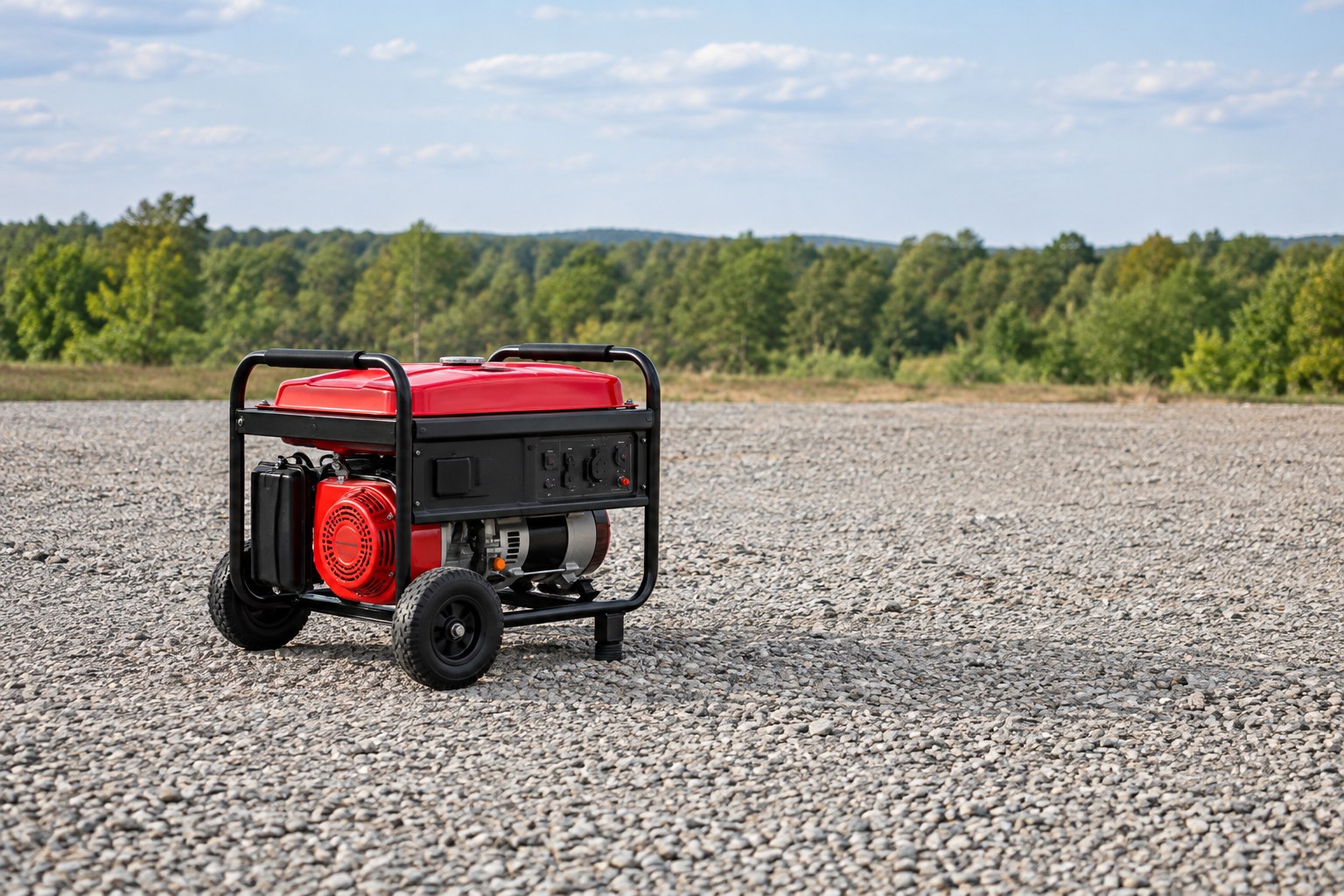
The first generator question is not how many watts to buy. It is whether your property has somewhere to operate the machine safely. A unit that fits the budget but cannot be placed properly is not a workable backup plan.
Draw a rough plan showing your home, neighboring buildings, doors, windows, vents, paths, and proposed generator position. Include openings that people might use during an outage, not just those normally left closed. A side yard that looks spacious from the porch can be close to a neighbor's bedroom window.
Apply the outdoor requirement first
CPSC says fuel-powered portable generators must operate outdoors, at least 20 feet from homes and buildings, with exhaust directed away from windows, doors, and vents. A garage, shed, crawlspace, or other enclosed area is not an operating location, even with a door open. Carbon monoxide cannot be judged by smell.
Measure rather than estimating from a photograph. Then check the generator's instructions for any additional placement requirements. A carbon monoxide shutoff feature or an alarm indoors does not make an unsuitable position acceptable. Those protections do not cancel the need for proper outdoor placement.
If the available space cannot meet the requirements, pause the purchase. A battery-based plan for limited loads or a plan to go elsewhere may fit the household better. An apartment balcony should not be treated as a convenient generator bay.
Plan for the weather that causes the outage
Read how the manufacturer requires the generator to be protected from rain and other wet conditions while preserving safe ventilation and clearances. Do not improvise an enclosure, put the machine inside a tent, or move it closer to the house to keep it dry. If a safe setup is unavailable in the actual weather, do not operate it.
Consider how the unit gets from storage to the operating location. Can the person expected to move it handle its weight? Does the route cross steps, soft ground, or a blocked gate? Keep the storage plan distinct from the running position; a place where equipment can sit while off may be entirely unsuitable while running.
Think through lighting for setup and access to manufacturer-approved controls. Do not rely on walking around a running machine in darkness to discover where everything is. Keep children, pets, and unnecessary visitors away from the operating area.
Add the electrical and fuel arrangements
The placement plan must work with an approved method of supplying the intended loads. Household wiring connections require appropriate transfer equipment installed by a qualified electrician. If the manufacturer permits direct appliance connections, the cords still need the correct rating, condition, and route. Never feed a generator into a wall outlet.
Fuel storage and handling have their own product instructions and local requirements. Resolve them before bringing fuel home; do not keep a reserve beside the proposed running position simply because it is convenient. Follow shutdown and cooling instructions before refueling.
Write down any unanswered question and take the sketch to the dealer or installer. Ask for confirmation of the location, connection method, weather protection, and maintenance plan. This turns a vague intention to “get a generator” into a decision you can assess. If any of those essentials remains unresolved, the shopping list is not ready yet.