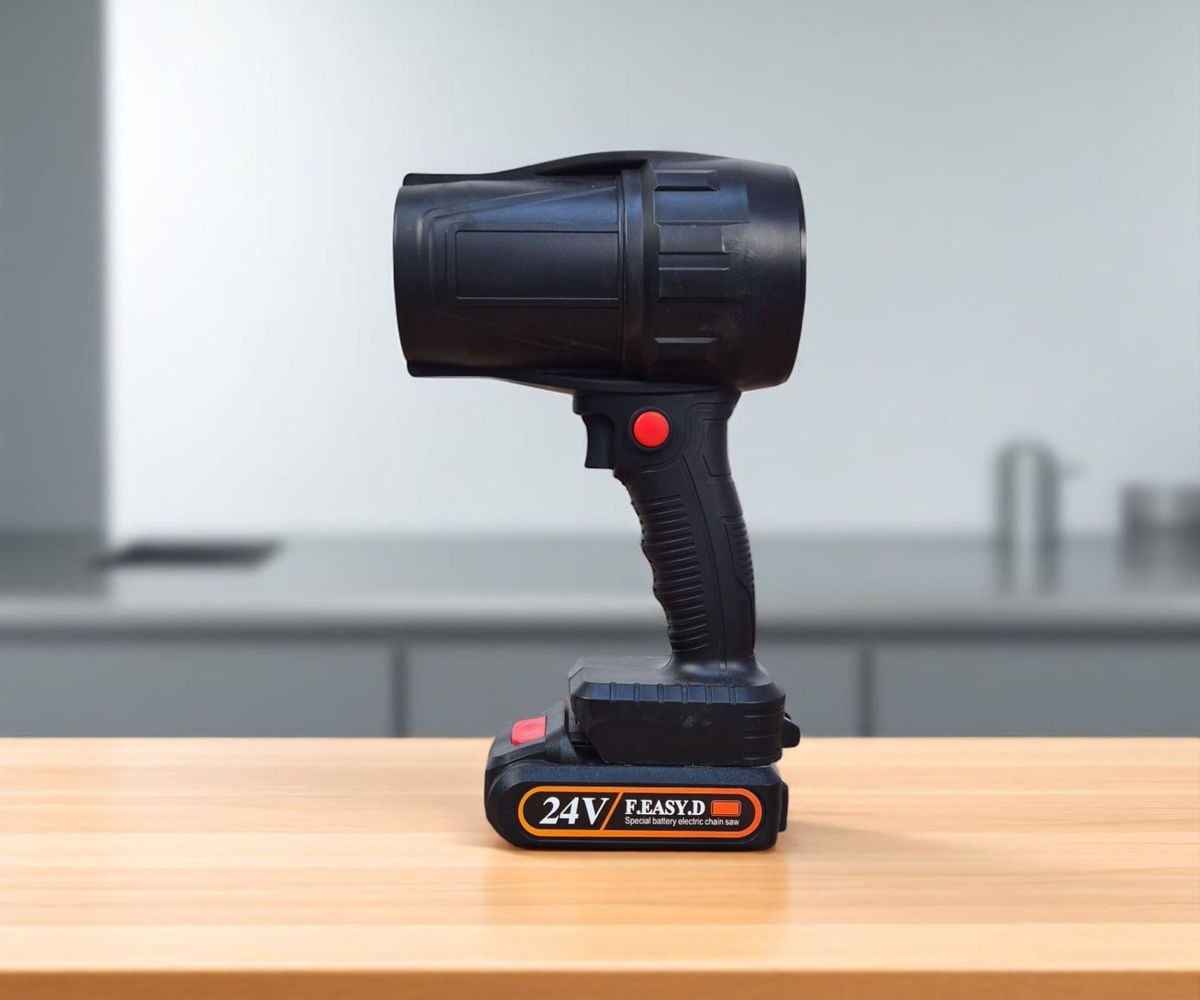
The first light you reach during an outage has a small job: let you stand up, see the floor, and find whatever you need next. It does not have to illuminate the yard. A flashlight buried in the emergency tote may be useful later, but it leaves a gap between the lights going out and someone getting to that tote.
Start by naming the places where people usually are after sunset. A bedroom, the living-room couch, and a desk may matter more than a central storage closet. Place a working light within reach of those locations, then decide where a larger lantern and spare batteries belong. This separates immediate access from the rest of your supplies.
Give each light an address
Choose a position you can explain in one sentence: front-left corner of the bedside drawer, for example. Avoid a drawer filled with loose cables, scissors, and miscellaneous hardware. A shallow compartment or small open tray makes the flashlight easier to identify by touch. If you use a hook, make sure the light can be removed without tugging furniture or stepping onto something.
A kitchen light should be reachable without crossing the room or passing the stove. Keep it away from water and cooking heat. For a hall or entry, use a shelf or holder that does not narrow the route out. Do not put a light on a stair tread, even if that seems like a convenient place to leave it.
Consider who will use each position. Someone who uses a walker needs to reach a light before moving away from their chair. A guest will not know your favorite drawer. A child may need a simple, age-appropriate light with a secure battery compartment rather than a powerful model with an exposed small battery.
Check the switch, not just the beam
Try the light while seated where it will be kept. Can you find its switch with one hand? Does it start at a useful brightness, or require several button presses to escape a flashing mode? An impressive maximum setting does little for this task if the controls are confusing. Keep the instructions for any lockout feature, and make sure another household member can turn it on.
EPA guidance favors flashlights or battery-powered lanterns over candles during outages. That makes a dependable light at hand more valuable than a backup candle beside it. Use the product as designed; do not cover a bright light with cloth to soften the beam or leave it pressed against bedding.
Keep the location dependable
Give a light borrowed for a repair or a trip a return routine. A small label inside the drawer can help, but a spare does not solve the problem if every light migrates to the garage. After use, put it back charged or with serviceable batteries, following its storage instructions.
Finally, do a daylight walk-through without switching off breakers or disabling anything. Starting at each usual seat or bed, point to the nearest light and describe how to reach it. Move awkward placements now. Repeat that quick check when furniture changes or guests arrive; a familiar location matters more than the number of flashlights in the house.