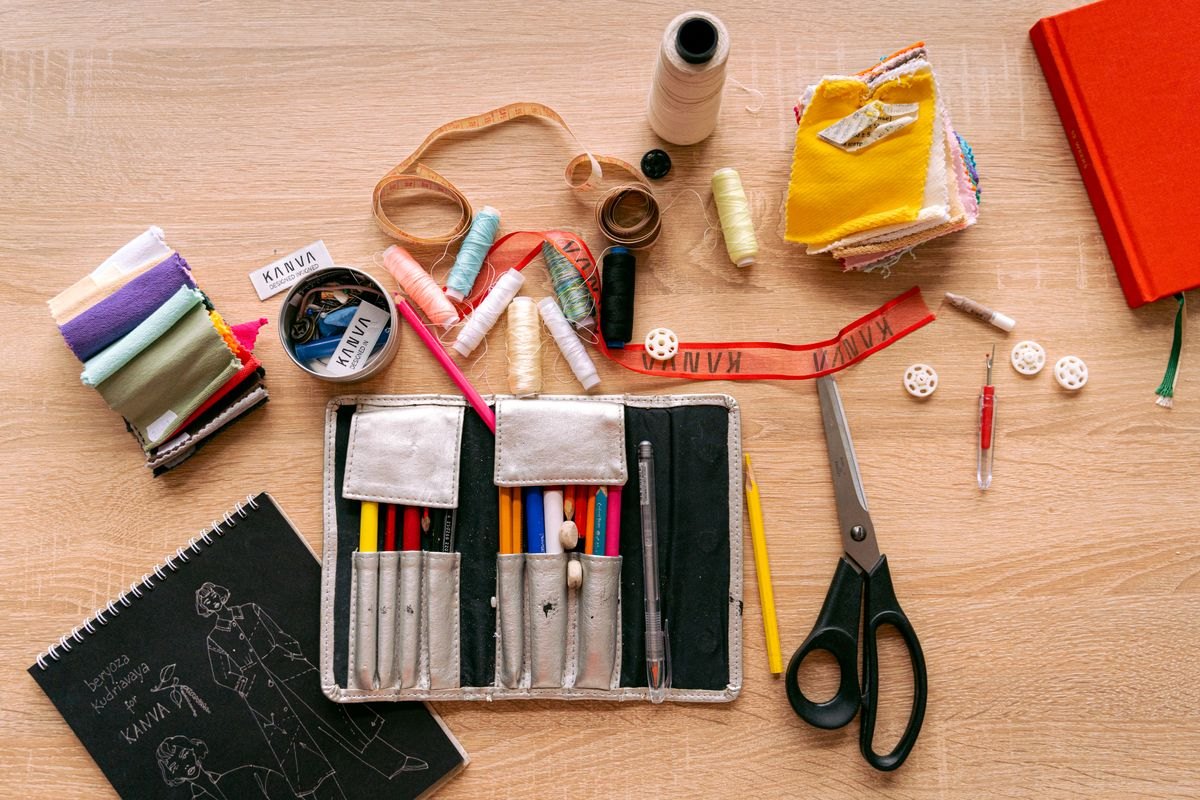
A sewing kit does not need dozens of tiny spools to be useful. A needle you can thread, thread suited to the garment, small scissors and a few relevant spare buttons may cover the repairs you actually encounter. The important test is whether the kit can be used comfortably, not how many pieces the package claims.
Open an inexpensive prepacked kit before relying on it. Check that the scissors cut thread cleanly, the needle eyes are usable and the thread does not immediately tangle. Replace awkward pieces individually rather than buying another large assortment.
Build around familiar clothing
Keep the spare buttons supplied with clothes in labeled packets so you know what they match. Choose a few neutral thread colors and suitable needles for the fabrics you wear most. A needle threader and thimble may help, but try them rather than assuming they suit everyone’s hands and eyesight.
Store needles and pins in a secure case or needle book. Count them back in after a repair, especially when working near children, pets or bedding. Keep scissors protected and the kit somewhere accessible to the intended adult but out of children’s reach.
Practice a small repair first
Use scrap fabric to learn a basic hand stitch and how to secure the thread. Then try attaching a spare button to the scrap, following a reliable illustrated guide. Practice lets you see how much tension holds the button without puckering the fabric.
On a real garment, inspect the area around the loose stitching. If the fabric itself is worn through, repeating stitches through the same weak spot may not last. A larger reinforcement or professional repair may be more appropriate.
Know which jobs to leave alone
Waterproof seams, technical fabrics and structural straps can need specific materials and methods. Sewing a new line through a coated garment may create holes that require an approved sealing process. Do not improvise repairs on safety equipment or assume a tidy stitch restores rated protection.
Keep the kit dry and replenish the supplies you use. Add tools only when a particular repair calls for them. A small set that has helped you replace a button at the kitchen table is more dependable than an unopened kit carried for years without anyone knowing how its parts work.