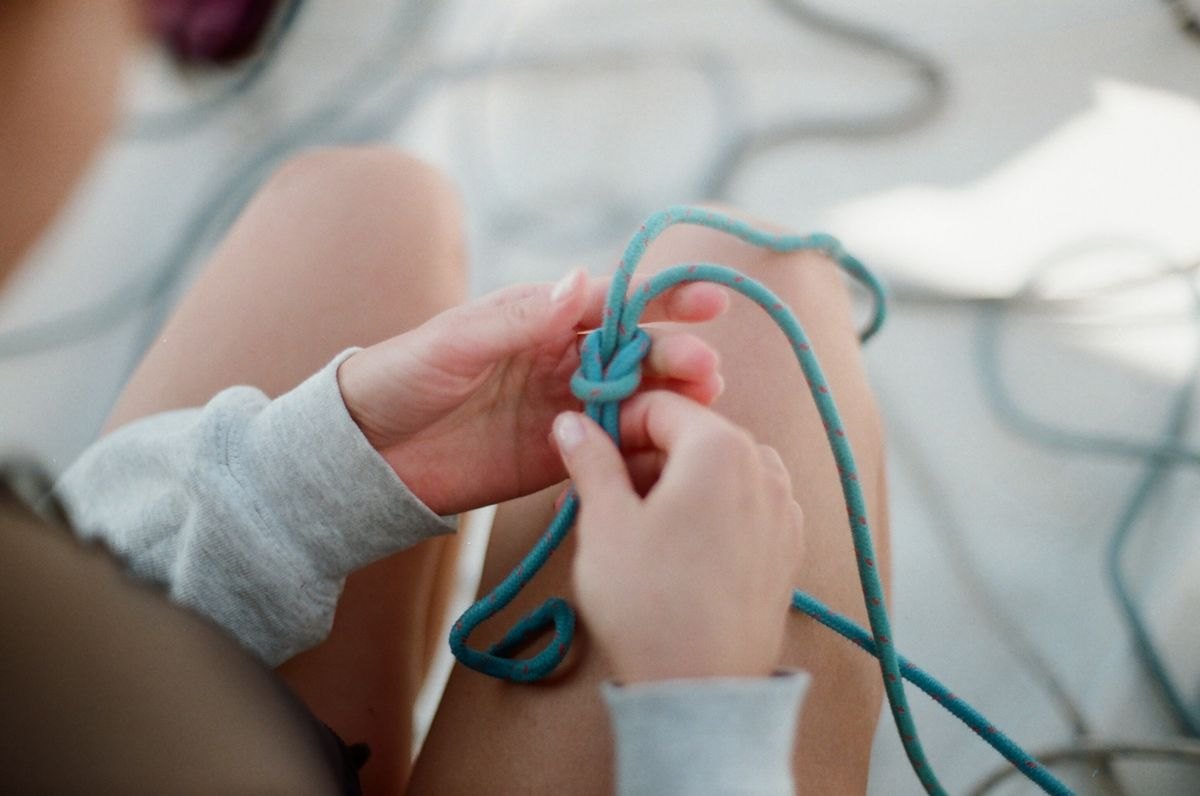
A knot is easier to learn when it has one modest job. Start with binding a light bundle of rolled fabric on a table, where a failure would simply loosen the bundle. Keep climbing, rescue, lifting, towing and load restraint entirely outside this practice exercise.
A square knot is a familiar binding knot. Scouting America’s basic-knot guidance describes it as a way to hold objects together. It is not a universal way to join ropes, and learning its shape should include learning those limits.
Make the ends easy to follow
Use a short, manageable piece of ordinary practice cord, with ends marked in different colors. Work in good light with the bundle resting on the table. Colored ends help you see whether the second crossing reverses the first instead of repeating the same movement.
For a square knot, cross one end over and under the other, then reverse the crossing for the second half. The common memory aid is right over left, then left over right. Follow a clear illustrated or demonstrated lesson and compare the finished shape with it. If the result looks different, untie it and start again rather than adding extra turns to disguise the mistake.
Check and undo it
Snug the knot gently around the harmless bundle. Observe how the cord lies and whether the intended binding stays in place when you move the bundle a little. This is practice, not a strength test. Different rope materials and loading conditions behave differently, so success here does not establish suitability for a more demanding job.
Untie it deliberately. Being able to release a knot is part of knowing how to use it. Practice several times with a pause between attempts, then try again on another day without watching the demonstration first.
Keep the task within its limits
Do not use this practice knot to support a person, suspend a heavy object or secure luggage to a vehicle. Those tasks require appropriate equipment, methods and training. Avoid loops around people or animals, and store loose cord out of young children’s reach.
Once the knot is familiar, choose the next skill because a real low-risk task calls for it. Knowing when a knot is unsuitable is as useful as being able to tie it quickly.