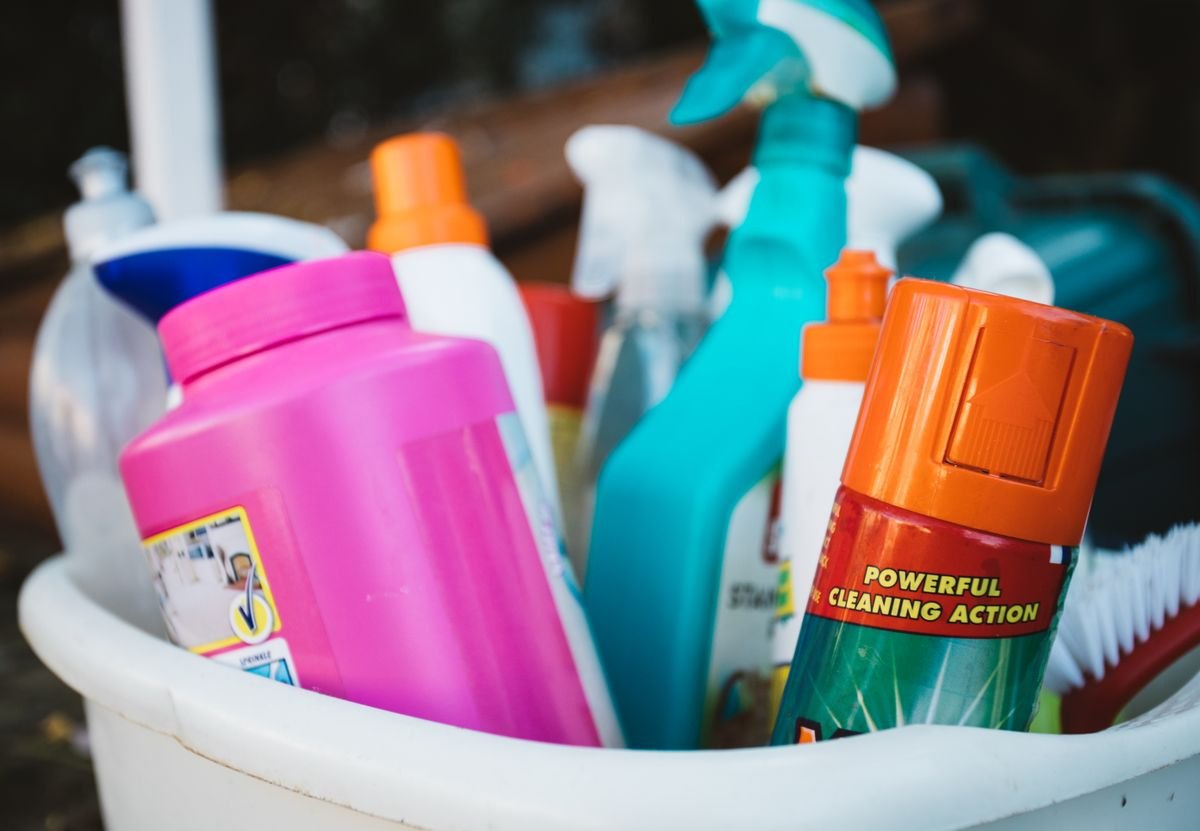
A spare shelf beside the pantry may look like a convenient place for cleaners, but a leak or mistaken container can turn that convenience into a problem. Keep cleaning chemicals separate from food, drinking water, utensils and food-storage containers.
Use the original labeled containers. EPA guidance warns against storing hazardous household products in food containers or removing their labels. A clear bottle with a handwritten nickname is not an adequate replacement for the product’s identity, instructions and warnings.
Choose the space by the label
Read storage requirements, including temperature, ventilation and incompatibilities. Keep containers upright and securely closed. Do not assume all cleaners belong together simply because they share a purpose; some products need separation from other chemicals.
Make the storage inaccessible to children and pets, using appropriate secure cabinets where needed. A high shelf alone may not solve access problems, and a heavy container stored overhead can be awkward to handle. Choose a location the responsible adult can use without unstable reaching or lifting.
Keep mixing out of the routine
Never combine leftover cleaning products to save space. CDC specifically warns not to mix bleach with ammonia or other cleaners. Follow one product’s directions for the intended surface and task rather than creating a stronger-looking mixture.
Keep measuring and application equipment for chemicals separate from food preparation. Do not return a container or utensil to kitchen use after it has held a hazardous cleaner. If instructions require dilution, label and handle the prepared product as directed rather than leaving an unidentified bottle for someone else to use.
Deal with old containers deliberately
Inspect stored products for obvious leakage or damaged packaging without opening or handling an unknown spill. For corroded containers, unidentified chemicals or disposal questions, contact the local household hazardous-waste service or relevant authority. Do not pour unwanted products down a drain unless the label and local guidance explicitly permit that method.
Buy quantities the household can use and store correctly. A large reserve is not economical if containers deteriorate or the space becomes crowded. Keep a modest inventory so an empty bottle is replaced without accumulating several forgotten partial containers. Clear separation and readable labels make everyday cleaning safer and keep emergency food supplies from sharing the same risks.