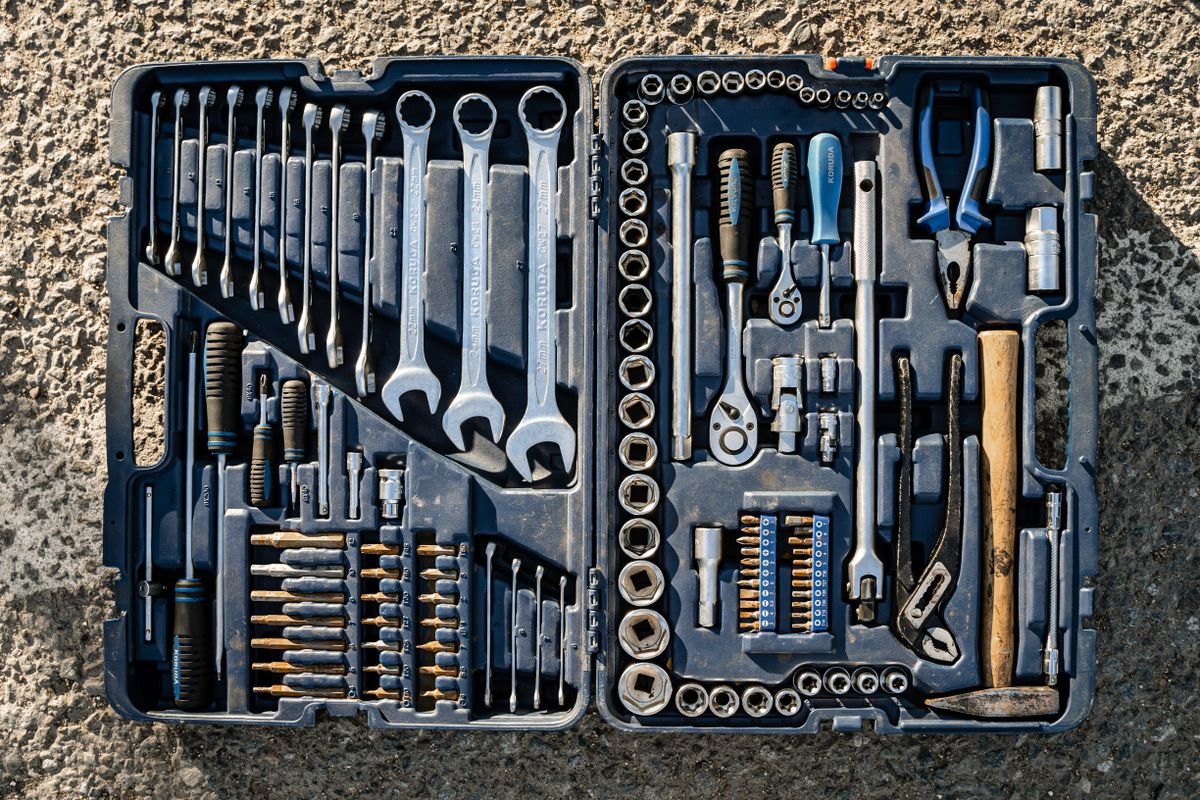
Think about the last few simple household jobs you postponed because the right tool was missing. Tightening a cabinet handle, measuring a shelf space or replacing an accessible battery cover each points to a specific tool. Use those jobs to define a starter kit rather than choosing solely by the number of pieces in a case.
A compact set might include suitable screwdrivers, a tape measure and a few other hand tools you already know how to use. The exact selection depends on the fittings and tasks in the home. Specialty work does not become suitable for DIY because a large kit contains something that resembles the required tool.
Make the fit visible
Check screw head types and sizes before choosing drivers. A poorly fitting tip can damage the fastener or slip. Keep matching bits in labeled positions so you do not repeatedly try the wrong one. Inspect handles and working edges for obvious damage before use.
Read the manufacturer’s directions for tools with moving blades or adjustment mechanisms. A folding utility knife, for example, may have a specific locking and blade-change process. Do not learn that process by forcing an unfamiliar part.
Choose a storage location people will use
Keep the kit in a dry, secure place with enough light to select a tool. Protect sharp parts and keep tools out of children’s reach. A case that is buried beneath seasonal storage will not help with a small job in the evening.
Give each frequently used item a visible place. Empty slots make missing tools easier to notice. Return the tool when the task is finished rather than setting it beside the repair indefinitely.
Keep a clear boundary around the kit
Ordinary hand tools are not a license to open electrical panels, alter gas equipment or dismantle safety-critical products. Follow the item’s manual and obtain qualified help for work beyond your knowledge. Turn off and safely isolate equipment as directed before any permitted maintenance.
Add a tool when a specific, appropriate job requires it and you understand how to use it. Remove damaged tools instead of leaving them as tempting substitutes. The best small kit is a collection you can identify and handle confidently, with an equally clear understanding of the jobs it does not cover.