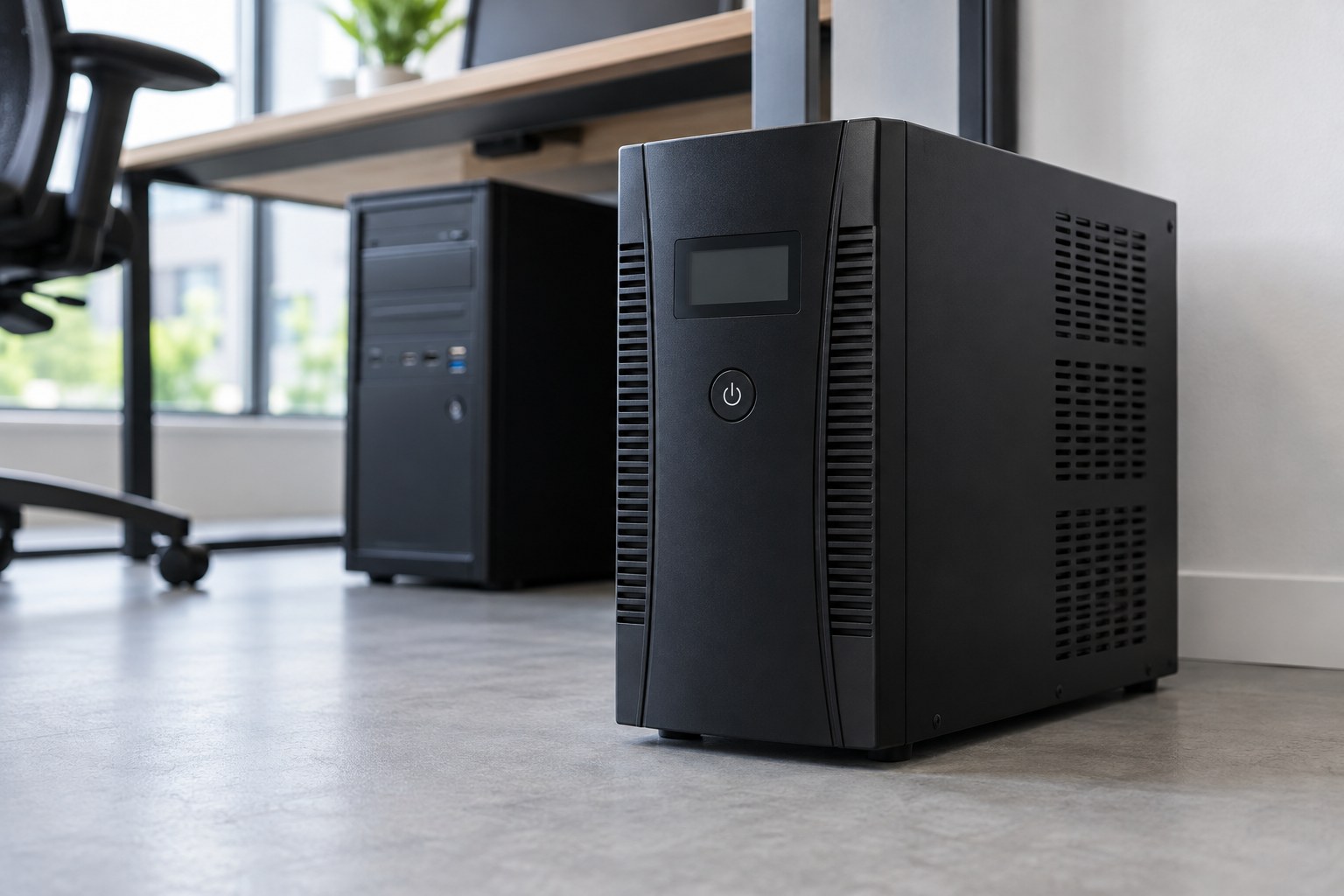
A UPS and a portable power station can both contain batteries and AC outlets, yet they are often bought for different reasons. A UPS is commonly used to keep electronics operating through a brief power interruption or allow an orderly shutdown. A portable power station is often chosen for movable stored energy and several charging options. Individual models can overlap, so compare the functions you need rather than relying on the category name.
The first question is what happens at the instant mains power disappears. If a computer must not restart, transfer behavior matters. A station's “backup” or emergency-power feature may have a switching delay that connected equipment cannot tolerate. Check the documented specification and the equipment requirements. Do not infer uninterrupted operation from the presence of pass-through charging.
Work out how long the job lasts
APC's UPS buying guide distinguishes the load a UPS can support from its runtime with that load. A unit may be able to run a desktop and monitor but only long enough to save work and shut down. That can be exactly the right design for an office, even if it is a poor fit for an evening of room lighting.
Read a runtime chart for the approximate combined load. A large VA number is not a promise of many hours of operation. For a power station, compare the stored energy and the relevant output limits, then look for tested runtime information from the manufacturer. Battery condition and operating conditions affect both categories.
Identify every component needed for the task. An internet connection may need a modem or fiber terminal in addition to the router. A computer may need a monitor. Include those loads rather than backing up only the most visible box.
Compare the way it will live in the house
A UPS normally stays near the equipment it serves. Check ventilation space, audible alarms, battery replacement instructions, and whether shutdown software is needed. Make sure someone knows what the alarm means and how to shut the connected equipment down safely. Silencing every warning is not the same as resolving its cause.
A portable station must be light enough to move to its intended location, and its handles should be usable by the person who will carry it. Check charging time, storage guidance, and whether its outputs need to be switched on separately. An automatic timeout may matter with a very small load. Read the manual before relying on a night-long connection.
Neither type should be hidden under bedding or used beyond its electrical rating. Do not connect a battery output to household wiring through a wall outlet. A home-wiring backup arrangement requires suitable equipment and professional installation.
A combination can be reasonable
You may decide on a small UPS for a desktop's safe shutdown and a separate power bank for phones. That is not redundant if the jobs differ. Equally, one suitable device may cover your actual needs without several batteries scattered around the house.
Write a plain success condition before buying: “save the open document without a restart,” or “charge two phones while using a table light.” Compare products against that sentence and their documented behavior. For medically necessary equipment, use the manufacturer and care team's approved plan instead of adapting a consumer-electronics example.
Finally, consider upkeep. A product with a clear battery replacement route and instructions you understand may be easier to maintain than a more elaborate unit. The best choice is the one whose limitations match the task you have assigned it.