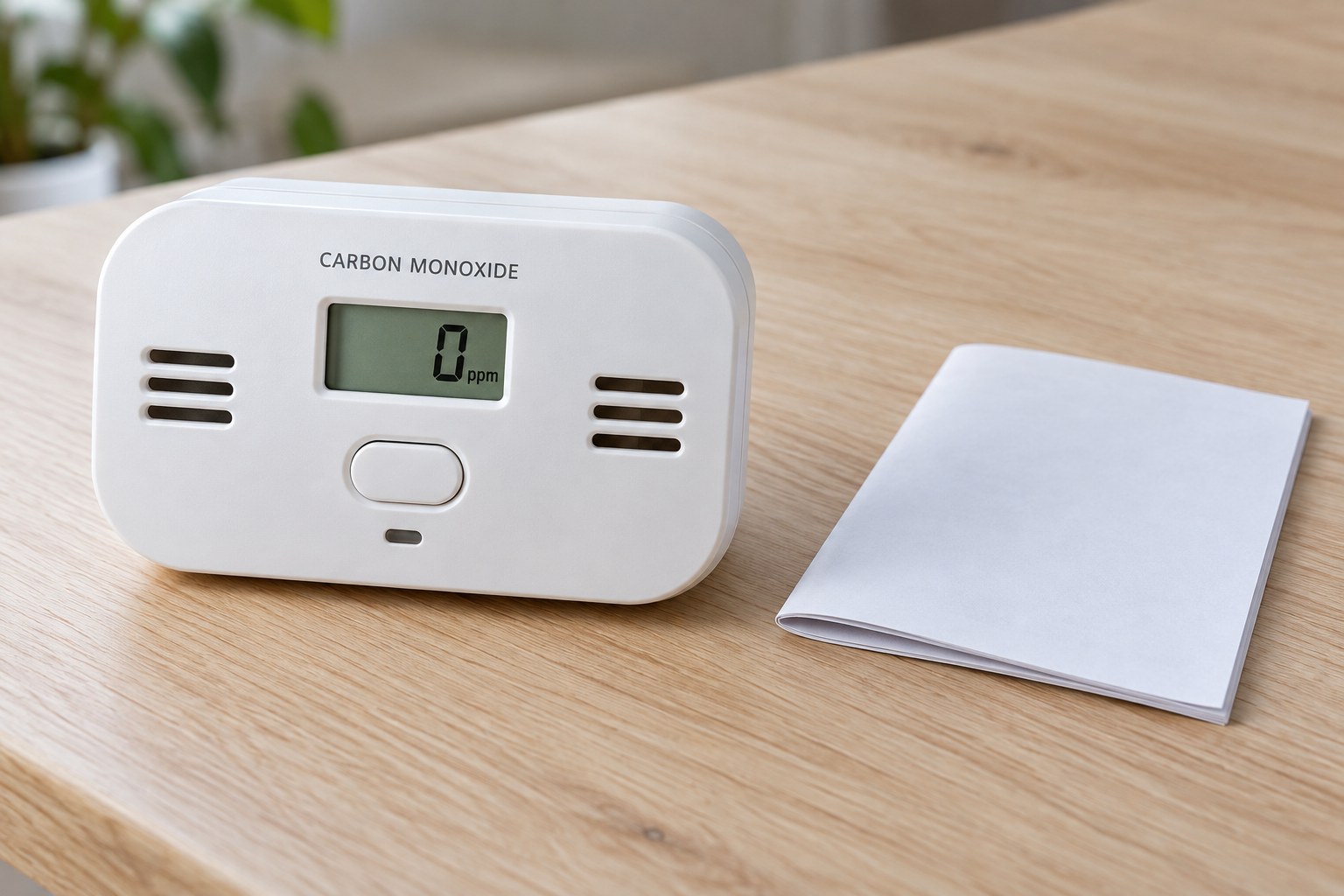
Carbon monoxide alarm instructions are easy to misplace because the alarm itself looks simple. Yet placement, power supply, testing and replacement can differ between products. Find the manual for the exact model before deciding that any convenient socket or patch of wall is suitable.
CPSC guidance calls for CO alarms on every level and outside separate sleeping areas, with installation following the manufacturer’s directions and applicable local requirements. A combination smoke and CO unit must meet the placement instructions for that particular product. Do not apply a generic claim that every CO alarm belongs near the floor or ceiling.
Read the placement diagram first
Look for permitted mounting positions, distances from appliances and areas the manufacturer excludes. Ventilation, humidity and other environmental conditions may affect suitability. If the home’s layout does not provide an obvious location, ask the manufacturer or a qualified installer rather than choosing an unsupported compromise.
Check whether the alarm can be heard where people sleep. People who are deaf or hard of hearing may need compatible visual or vibration alerts. A standard sounder in a distant hallway may not meet everyone’s needs.
Understand the signals before they occur
Use the approved test procedure and learn the difference between an alarm, a low-battery indication and an end-of-life signal. Keep those meanings accessible. A periodic chirp should prompt the action in the manual, not permanent battery removal.
Follow the replacement interval for the actual CO model. Do not assume it matches the commonly cited ten-year replacement period for smoke alarms. Record the installation or manufacture information needed to know when replacement is due.
Pair the alarm with a response
If a CO alarm sounds, move everyone to fresh air and call emergency services from outside. Do not stay indoors trying to identify the source or silence the device. Do not re-enter until responders say it is safe.
An alarm is a warning layer, not permission to use an outdoor generator, grill or stove inside. Keep fuel-burning equipment properly installed and maintained, and follow its operating requirements. Review alarm placement after changing sleeping rooms or making alterations to the home so the protection still matches where people actually spend time.