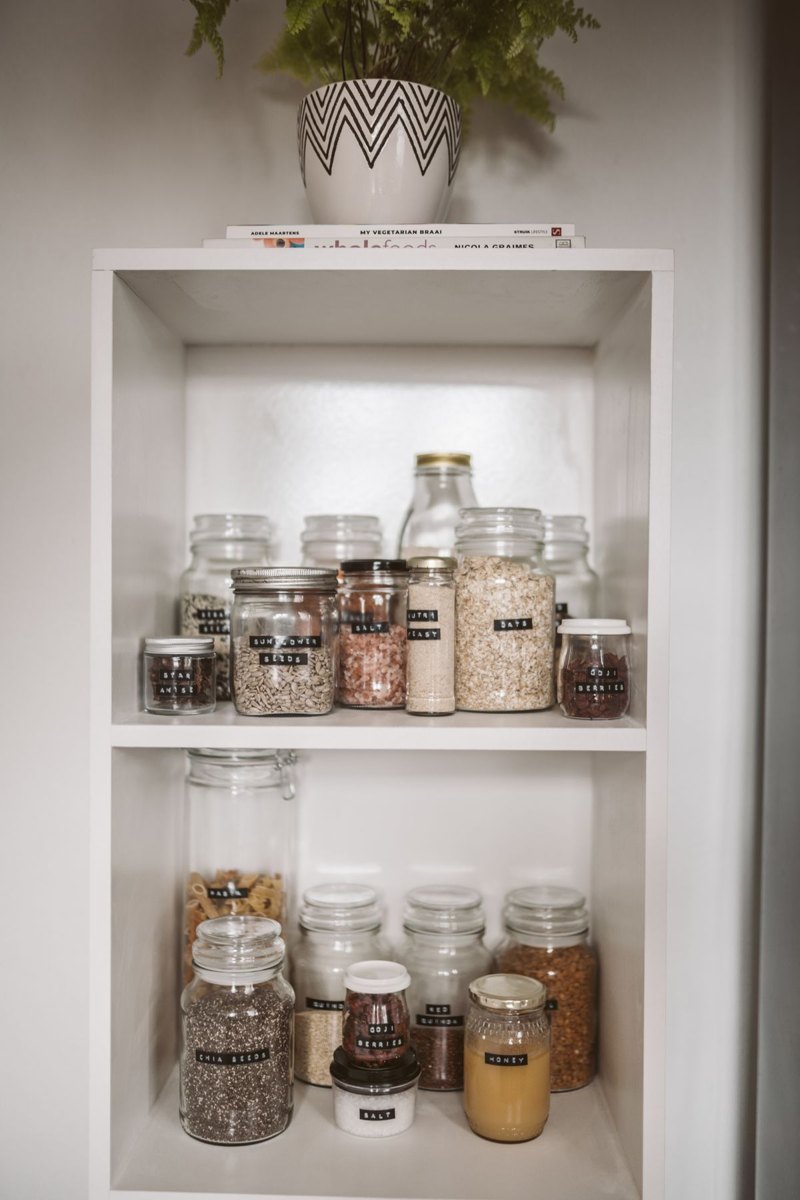
A pantry rotation system fails when updating the system takes longer than putting away groceries. You can manage a modest reserve with physical order and a short shopping list. The aim is to notice what should be used next and what needs replacing, not to record every movement of a can.
Choose a shelf or a few clearly defined sections. Group foods by the way you use them: breakfast items, ready-to-eat proteins, vegetables, and snacks, for example. Keep the oldest suitable stock at the front and put newer purchases behind it, while checking dates and package condition rather than relying on purchase order alone.
Make the next item obvious
Use a small “use next” area for food approaching its quality date or already partway through an allowed opened-storage period. Plan an ordinary meal around those items. Do not mix unsafe or suspect packages into that area as if urgency could make them acceptable.
Keep enough space to see labels. Deep stacks hide both dates and leaks. If the shelf is crowded, reduce duplicate varieties before buying organizers. A simple row you can inspect is easier to maintain than an intricate dispenser that only fits one can size.
USDA advises cool, dry storage for shelf-stable food. Review the location as well as the dates: a shelf beside a hot appliance or a damp wall may need changing. Rotation cannot compensate for poor storage conditions.
Replace a meal, not just an object
When you use the last component of a planned no-cook meal, put that item on the grocery list immediately. It is easy to count plenty of food while missing the one thing that makes the combination useful. A note such as “replace two small bean cans” is easier to act on than “buy emergency supplies.”
Keep the quantity modest enough that the household will eat it before quality becomes disappointing. Buying a large case because it is cheap only helps when the food fits your diet, storage space, and normal consumption.
During a regular kitchen tidy, glance at dates, damaged packaging, and items nobody chooses. Change the next purchase accordingly. If an online inventory helps you, use it, but do not let maintaining a spreadsheet become a condition for keeping food in order. The visible shelf and replacement note should still make sense when the phone is unavailable.