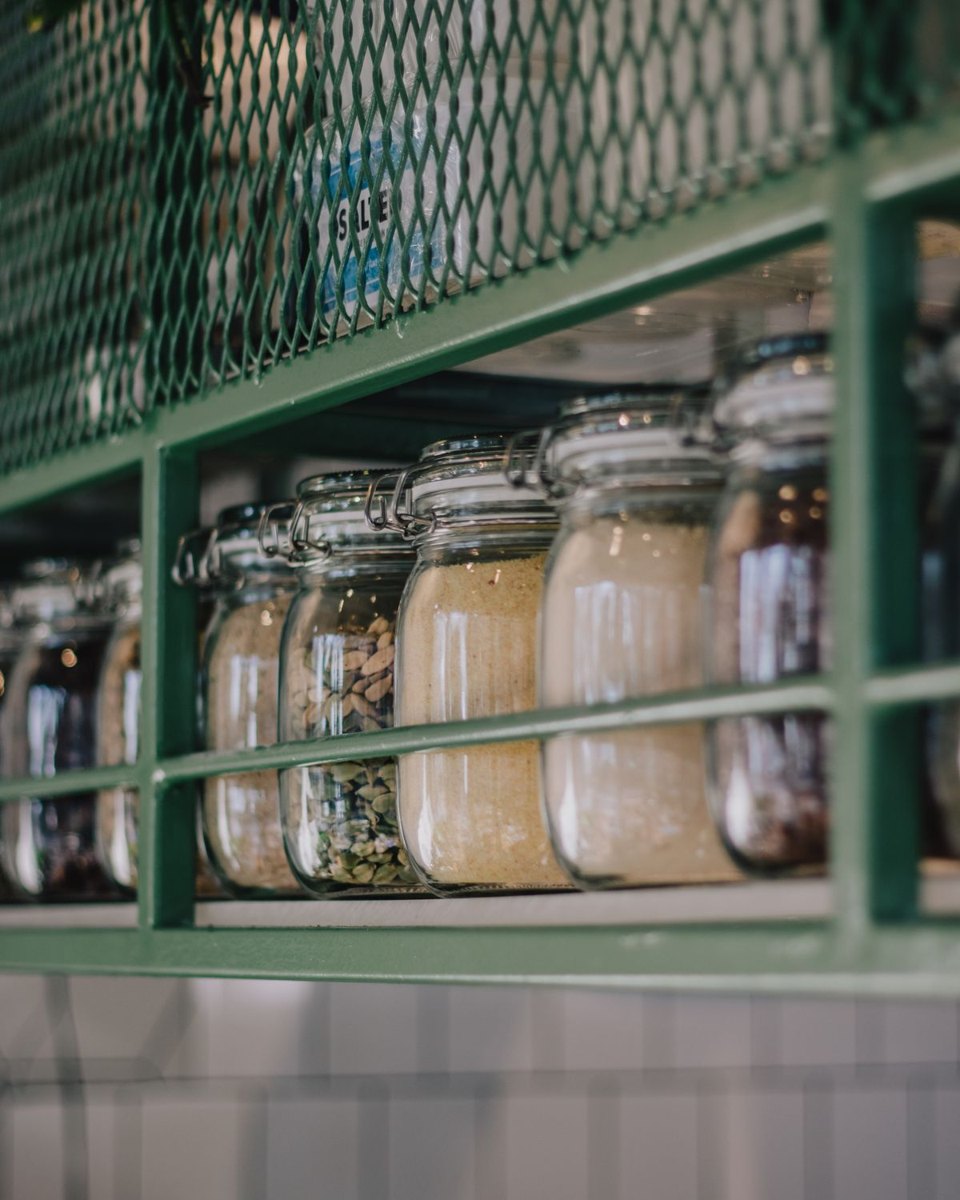
A sealed bin does not make a damp storage room an ideal pantry. Moisture can affect packaging, hide leaks, and make inspection difficult. Before buying containers, look at why the area is damp and whether another location would be more suitable for food.
USDA recommends cool, dry storage for shelf-stable products and advises against locations such as under a sink or a damp basement. Take that as a reason to assess the room, not a challenge to find a stronger lid. If there is an active leak or mold problem, address it and move food to a suitable place.
Keep the product identifiable
Original packaging contains ingredients, dates, preparation instructions, and lot information. If you place bags inside a protective food-storage container, retain those labels. If decanting is appropriate for the food and container, transfer the necessary information in a clear way and avoid mixing old and new batches.
Choose containers intended for food, with closures you can inspect and clean. Do not use a bucket whose previous contents are unknown. Clean and dry containers according to their instructions before filling them; trapped moisture is not solved by closing the lid.
Make inspection easy
Leave enough space around stored food to notice leaks or pests and to remove packages without unloading the entire area. Avoid pressing bags against a damp wall. Keep heavy items low on suitable shelving, with labels visible.
Check the location after seasonal changes or plumbing work. A cupboard that was dry in winter can have a different problem in humid weather. Note condensation, damaged cardboard, or a smell that was not there before. If food or packaging is affected, follow appropriate safety guidance rather than simply drying the outside and returning it to the shelf.
Buy to fit the space
Large sacks of dry staples can be awkward in a small home and may require cooking water and fuel during an outage. Balance them with foods that fit your preparation plan. A smaller quantity in a suitable location is easier to maintain than a bargain quantity stored where you cannot keep it dry.
Do not improvise long-term preservation methods or add oxygen absorbers to unknown foods and conditions. Use validated product-specific storage guidance if you need specialized storage. For an everyday rotating reserve, sound packaging, a suitable room, and regular use usually keep the arrangement simpler and easier to check.