Wildfire smoke can affect homes far from the flames. A clearer-looking sky does not always mean the particle levels have returned to normal, and smoke conditions can change over the course of a day. Use official air-quality information, including AirNow’s Fire and Smoke Map, alongside local health and emergency guidance.
If staying home is safe, a room with cleaner indoor air can reduce exposure. It does not make a home inside an evacuation area safe to occupy. Evacuation instructions take priority over a filtration setup, however carefully it was planned.
Choose a room people can actually use
Select a room large enough for the people who need it, with doors and windows that can close. Consider seating, sleeping needs, accessibility and how people reach a bathroom. A tiny closet may be easy to isolate but unsuitable for spending hours together.
Check how the room will remain cool without drawing smoky outside air into it. Smoke and heat may occur together. If the closed room becomes too hot, identify another location with air conditioning and appropriate filtration rather than assuming smoke protection requires enduring unsafe heat.
Do not seal exits or make windows and doors impossible to open in an emergency. The purpose is to reduce incoming smoke during safe occupancy, not to create an improvised airtight chamber.
Match the air cleaner to the room
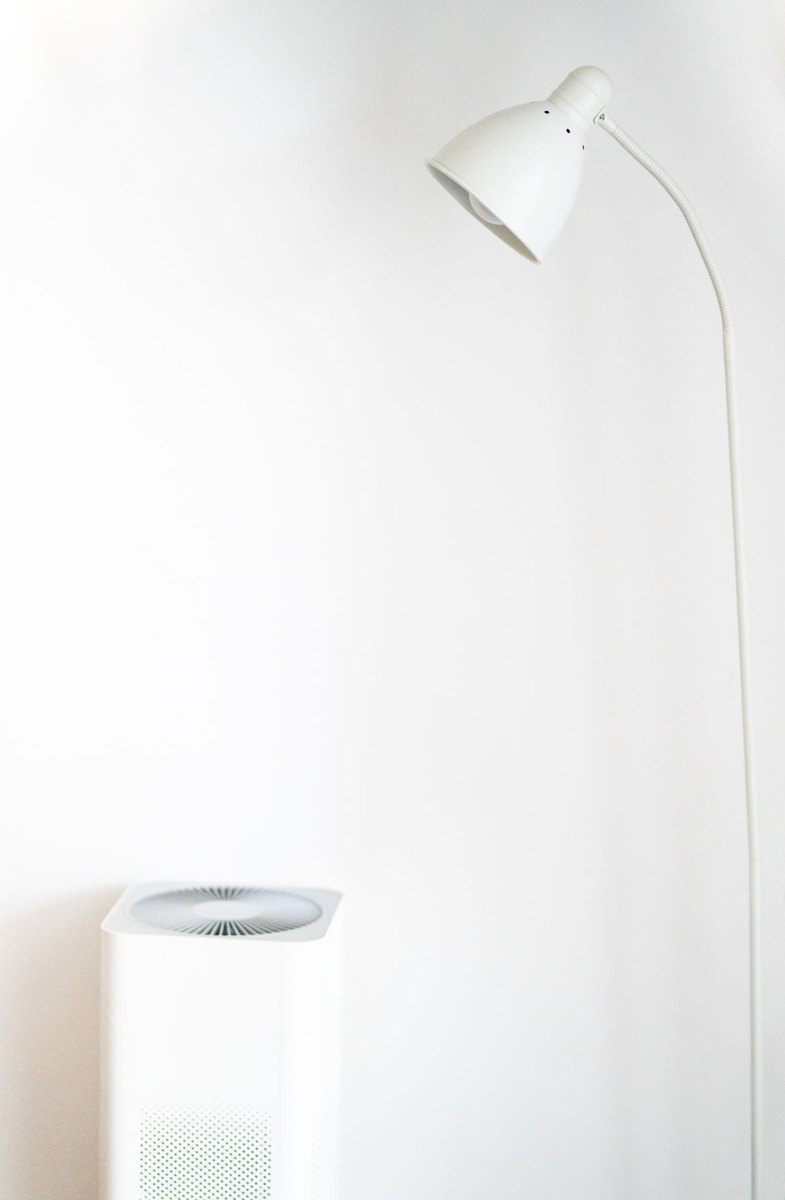
Choose a portable particle air cleaner rated for the room’s size and the intended use. Check the manufacturer’s room-size and clean-air delivery information rather than relying only on a product’s marketing name. Avoid devices that deliberately generate ozone.
Place it according to the clearance instructions, with the airflow unobstructed. Think about noise at the speed you will need: an effective setting that nobody can tolerate may be turned down or switched off. Confirm filter availability and keep a suitable replacement if feasible. Record the exact filter reference so a similar-looking incompatible filter is not bought later.
For central heating or cooling filtration, check which filter the system can accommodate. AirNow recommends high-efficiency filtration, including MERV-13 or higher where the HVAC system supports it. Ask a qualified technician if compatibility or airflow is unclear. A restrictive filter inserted into an unsuitable system is not a substitute for that check.
Reduce indoor particle sources
Avoid adding smoke or particles through candles, smoking or other unnecessary combustion. Adjust cooking plans to reduce indoor pollution where possible. Keep the room’s purpose simple: fewer avoidable particle sources mean the cleaner has less to remove.
Read the controls for air conditioners and ventilation equipment in advance. Recirculation and outdoor-air settings vary by product. A portable unit, a window unit and a central system may move air differently, so do not assume a setting on one applies to all.
Keep an alternative destination
Identify a public cleaner-air space or another suitable place to stay, and check current opening information during an event. Include transport, pets and any care needs in the plan. People with health conditions affected by smoke should discuss individualized precautions with their healthcare provider before smoke season.
When conditions improve, follow local guidance on airing out the home and returning to normal operation. Check and replace filters according to their instructions and condition. Keep notes on room comfort, noise and supplies used; those details will help you improve the setup before the next smoke event.