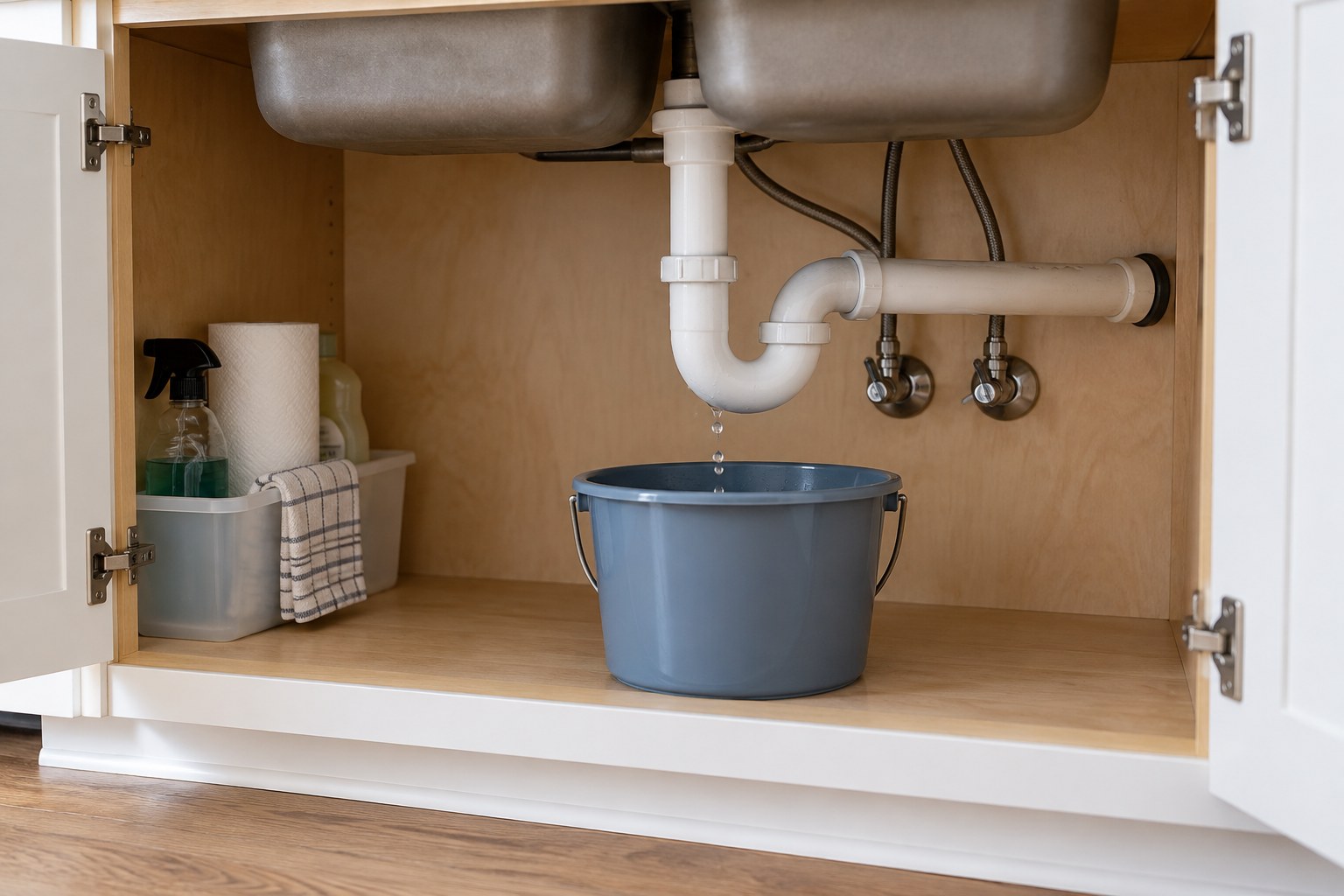
A dripping supply connection and water coming through a ceiling need different responses. Before reaching for a bucket, look at what is happening from a safe position. Water near electrical equipment, a sagging ceiling, sewage or a rapidly spreading flood can make ordinary household cleanup unsafe.
Keep people and pets away from the affected area. If there is immediate danger, leave and call emergency services. For a routine plumbing leak, contact the landlord, building manager or plumber and explain the location, apparent source and how quickly water is spreading.
Use a known shutoff only if safe
If you know the correct water valve and can reach it safely, follow the instructions you have learned for that installation. Do not force a stuck valve or enter water to reach a control. Shared-building valves and utility-owned equipment should be handled according to the responsible provider’s guidance.
Do not operate electrical switches, plugs or appliances while standing in water. CDC advises calling an electrician when a main electrical switch cannot be reached without entering standing water. A small leak can still matter if water has reached an outlet or appliance.
Limit damage without taking on the repair
Where the area is clearly safe, move nearby dry belongings away and contain a minor drip with a suitable container. Avoid climbing beneath a bulging ceiling or puncturing it to release water. Leave structural concerns and hidden leaks to qualified professionals.
Take a few photographs from a safe location before moving items if possible. Note when the leak was noticed and any relevant action, such as closing a known water valve. These details help the person responding understand what changed.
Prepare for the service visit
Clear a safe access route and identify the appliance model or fixture if it is relevant and readable without moving equipment. Keep contact details and any building-access instructions ready. Do not restart wet equipment just to demonstrate the fault.
After the source is repaired, ask what assessment or drying is needed. A stopped drip does not prove hidden materials are dry or electrical parts are safe. EPA WaterSense recommends addressing leaks promptly and considering leak-detection devices where useful. If you add a sensor, check its power, notification and maintenance requirements so it provides a warning you can actually receive.