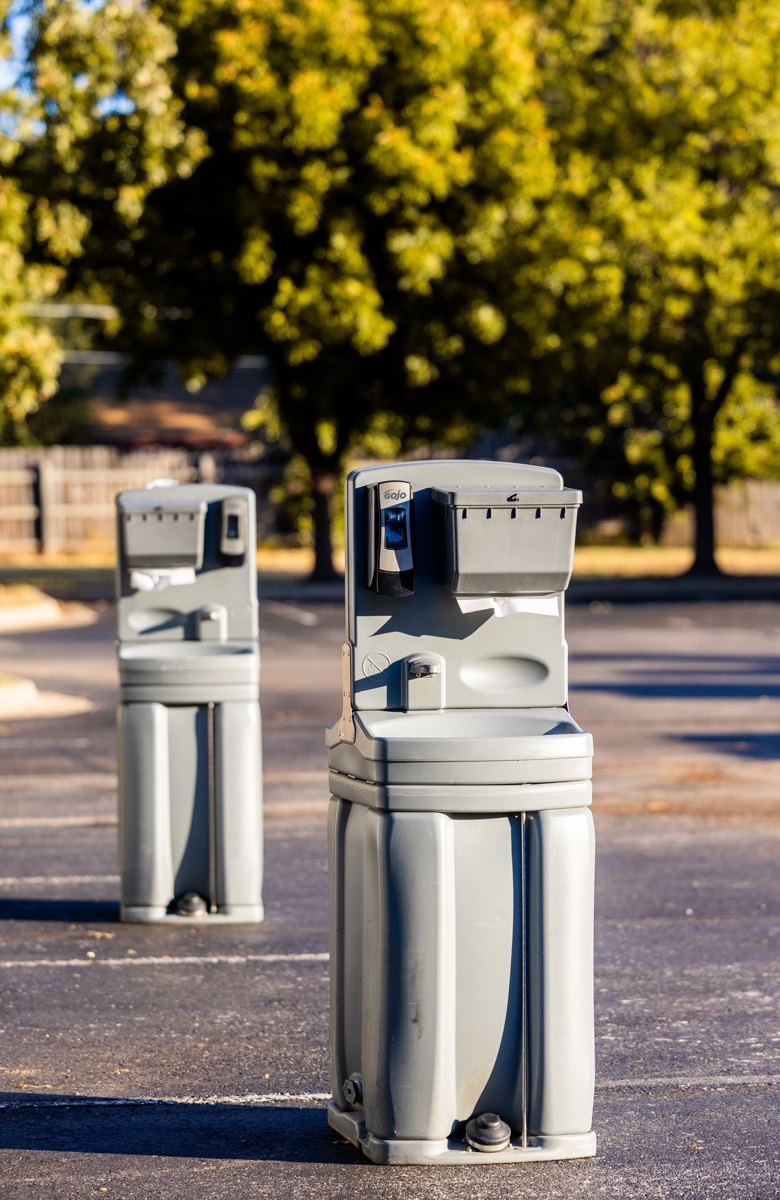
When the tap stops, handwashing becomes a matter of equipment as well as habit. A drinking-water bottle on the counter does not automatically provide an easy way for several people to wash their hands. Plan a small station with suitable water, soap, a controlled pour, and a way to manage the used water.
Choose a container intended for the water you are storing and a stable position where it will not fall when its tap is operated. Keep soap and a clean drying method nearby. If there is no working sink drain, collect runoff in a suitable basin and follow local instructions for disposal. Do not place the station where a spill will reach electrical equipment or create a slippery exit route.
Find out which water is usable
A loss of service is different from a contamination advisory. Read the local notice before assuming tap water can be used. CDC notes that handwashing with tap water is often allowed during a boil-water advisory, but the local instructions control; a do-not-use advisory is different.
Keep safe water available when the existing supply cannot be used. Do not dip dirty hands into the stored-water container. Use its intended spigot or have water poured without contaminating the opening. Make sure children can use the station with appropriate supervision rather than climbing onto unstable furniture.
Keep soap in the plan
Wash with soap and water when possible. Hand sanitizer is a backup when those are unavailable, not a replacement for every situation. CDC recommends at least 60% alcohol for that backup and explains that sanitizer does not remove every type of germ or chemical effectively.
Follow the sanitizer label and supervise children. Store it safely away from heat, flames, and access by young children. If hands are visibly dirty or contaminated by substances requiring washing, obtain suitable washing facilities rather than assuming extra sanitizer will solve the problem.
Try the arrangement while services work
Set up the station and use it for an ordinary kitchen task. Notice whether the flow is hard to control, the soap falls into runoff, or the container needs lifting every time. Adjust the position and count the water actually needed for a reasonable washing routine; do not reduce essential hygiene to meet an arbitrary storage target.
Keep supplies together and separate from food preparation surfaces where dirty runoff could splash. After a disruption, clean and dry reusable equipment according to its instructions before storing it. A simple arrangement that people can use comfortably is more likely to support good hygiene than a clever container nobody can operate with wet hands.