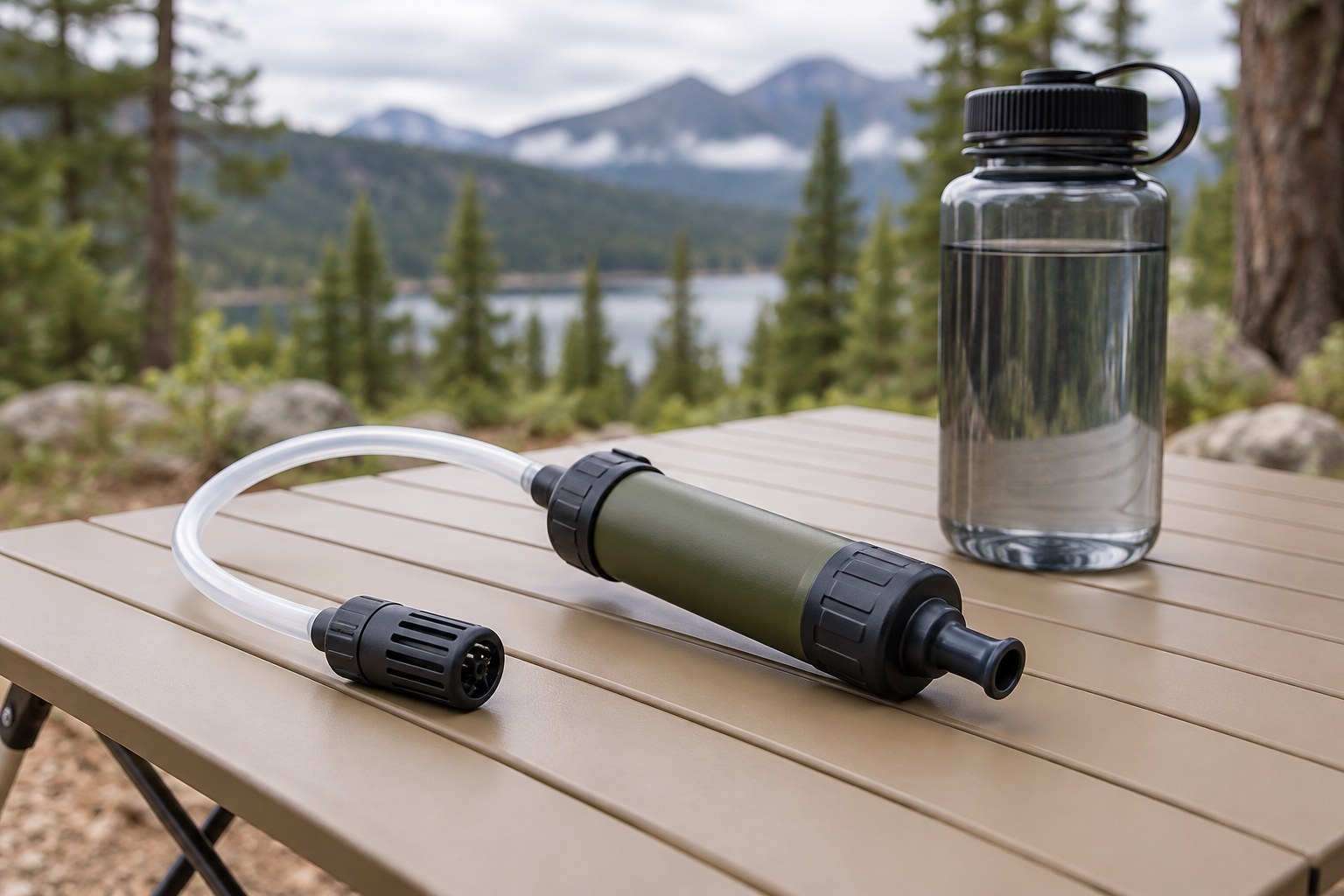
“Filter” and “purifier” are often treated as if one simply meant a stronger version of the other. That shortcut is unreliable. Water-treatment products use different methods, and their claims may cover particular germs, chemicals, taste, or several of these. The useful question is what the exact product is documented to address.
A pitcher that improves the taste of treated tap water is not automatically suitable for untreated stream water. A portable device intended for certain microbes is not necessarily a solution to chemical contamination. CDC advises matching the treatment to the contaminants of concern and checking specific certification claims.
Start with the source and the problem
For a household water advisory, read the utility or health department's instructions first. If the concern is a harmful chemical, boiling is not a universal fix. If authorities say not to use the water, a familiar filter should not be treated as permission to ignore that instruction.
For an outdoor trip, find out what the route's water sources are like and what treatment is recommended by the relevant land manager or health guidance. Clear water is not proof of safety. A product's promotional photograph beside a stream does not establish that it addresses every hazard in that stream.
Write down the problem in plain language before shopping: a particular contaminant identified in testing, or the microbial treatment requirements of a planned trip. If the problem is unknown, seek appropriate advice or use a known safe water source instead of choosing a device from its name.
Read the claim, not just the standard number
Certification marks can be helpful, but look up what the model is certified to reduce. A standard may contain several possible claims; certification does not mean the product removes every substance mentioned under that standard. Match the exact model and replacement element in the listing.
Read limitations involving water clarity, temperature, flow, cartridge life, and cleaning. A system may need a pretreatment step or a disinfecting stage. Follow the complete manufacturer's procedure rather than using only the piece that is convenient. Do not make up a chemical dose or combine products based on an assumption that more treatment must be better.
Count the equipment needed to keep it working
Some devices require batteries, a charged power source, a replacement cartridge, or a particular cleaning tool. Check what comes in the package and what must be bought separately. Store instructions offline, especially when the process includes waiting times or a sequence that is easy to forget.
Keep dirty-water components separate from clean-water containers and outlets. A correctly selected system can still be undermined if untreated water touches the clean side. Practice the handling sequence with safe water when the manufacturer permits it; this is a way to learn the controls and connections, not a validation test for contaminated water.
Consider how much water the household needs and how long the complete process takes. A small device can be sensible for one person's bottle and cumbersome for several people's drinking and cooking. Conversely, a large installed system may depend on pressure or electricity unavailable during the emergency you are planning for.
No label replaces an actual plan for safe source water, suitable treatment, and clean storage afterward. Keep a stored drinking-water reserve where possible so an unfamiliar device is not the only option on the first day of an interruption.