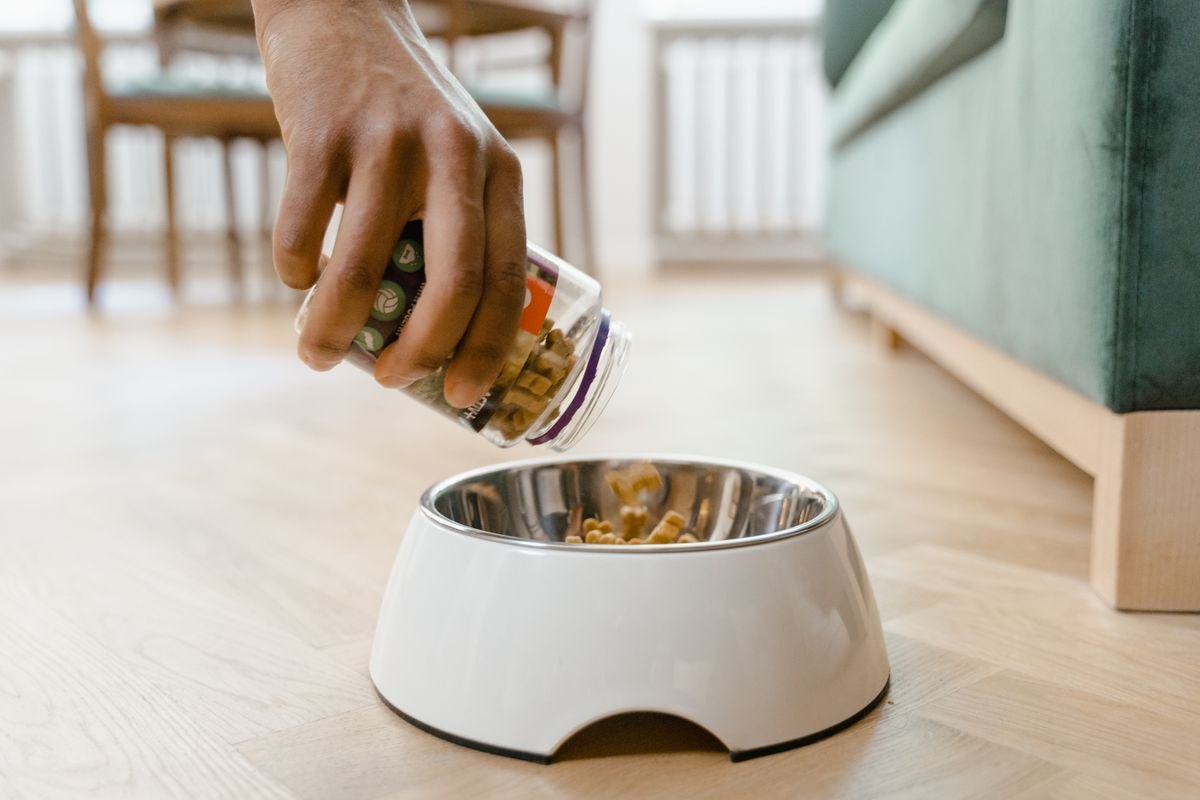
Pet food deserves a place on the household shopping and rotation list, not a separate bag bought once and forgotten. A sudden switch to an unfamiliar food may not suit the animal, and a prescribed diet can be difficult to replace at short notice. Plan around the food currently used and discuss special needs with the veterinarian.
Count the reserve using the pet's established feeding plan and the amount in each package. Do not change feeding quantities simply to make a stored supply last longer. If more than one pet eats a different diet, label their supplies so another household member can tell them apart.
Keep the bag with the food
FDA advises retaining original pet-food packaging and, when using an outer storage container, placing the bag inside it rather than pouring the kibble straight in. The package preserves details such as the product name, lot number, and date. These can matter if a safety notice or product problem arises.
Choose a dry, suitable location that pets cannot raid and children cannot easily access. Follow the package's storage directions. A garage may have more room but can expose the food to heat or damp conditions. Keep the food away from cleaning chemicals and other substances that could contaminate it.
Wash and dry reusable containers and scoops as recommended before adding a new bag. Do not continually top up old food with new food while losing track of either batch. Keeping the original bag helps make the transition visible.
Include opened food and water
Wet food may need refrigeration after opening. Smaller containers can be easier to use during an outage if they match the pet's normal portion, but follow the label rather than treating any small can as a single meal. Have a plan for safe storage or disposal of the remainder.
Include the pet's drinking water in the household reserve and follow local water-advisory instructions for animals as well as people. Store a bowl and any necessary measuring tool with the travel portion of the kit so they do not have to be collected at the last minute.
Use the oldest suitable reserve food in the normal feeding routine, then replace it. Review the supply when the diet changes or a pet joins the household. A large bag of an old food is not a dependable reserve for an animal that can no longer eat it.