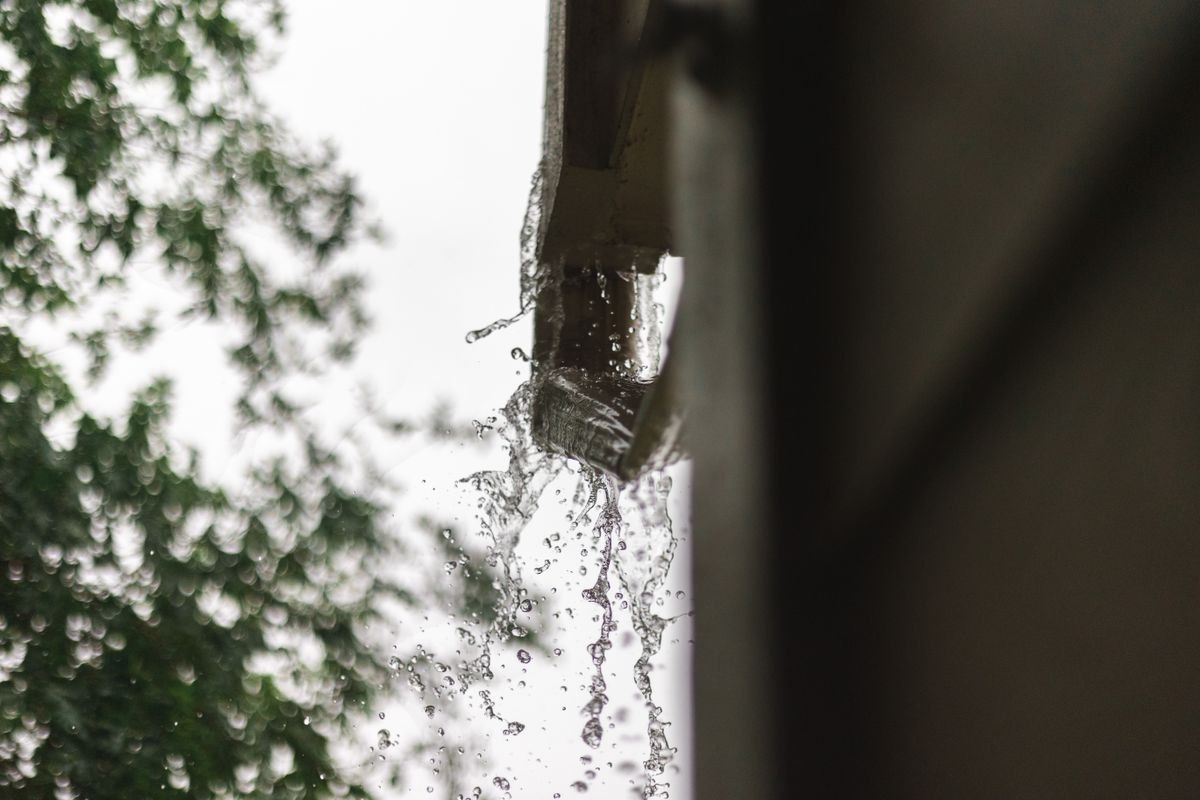
Leaves gather gradually, which makes drainage maintenance easy to postpone. A calm-weather look at gutters, downspouts and visible ground-level drains can reveal a blocked outlet before heavy rain. The important boundary is that routine maintenance stops when reaching the blockage would expose you to flooding, electricity or a fall.
Begin from the ground. Look for disconnected downspouts, visible accumulations and water stains that suggest overflow. Arrange qualified help for roof-level work or locations you cannot safely reach. A heavy-rain forecast is not a reason to hurry onto a ladder.
Know what belongs to you
Identify which drains are part of the property and which are maintained by the city, building manager or another owner. Keep the relevant reporting number available. Never lift a public drain cover, enter a culvert or reach into a submerged opening.
For a safely accessible private surface drain, follow the maintenance instructions and use appropriate protection for the task. Do not handle unknown sharp material or contaminated debris bare-handed. If the system is repeatedly blocked, ask a qualified professional to assess the underlying problem rather than simply moving debris farther along.
Watch where water is directed
Check that ordinary storage has not blocked drainage routes or downspout outlets. Changes to grading, pipes or discharge locations may affect neighboring property and local requirements, so get suitable advice before rerouting water.
Keep the maintenance task separate from flood protection. Clear gutters cannot guarantee that a home will remain dry in severe rainfall or rising river water. Continue to follow warnings and evacuation instructions even if the drainage system was recently cleaned.
Leave floodwater alone
Do not wade into water to uncover a drain. Depth, current, contamination and hidden openings can be difficult to judge. Water may also conceal an electrical hazard. Move to safety and report the problem to the responsible authority.
After conditions have safely returned to normal, document recurring trouble spots from a safe position. Note whether overflow occurred at the same downspout or low point. That information helps a professional identify what needs repair and gives the next routine check a clear purpose.