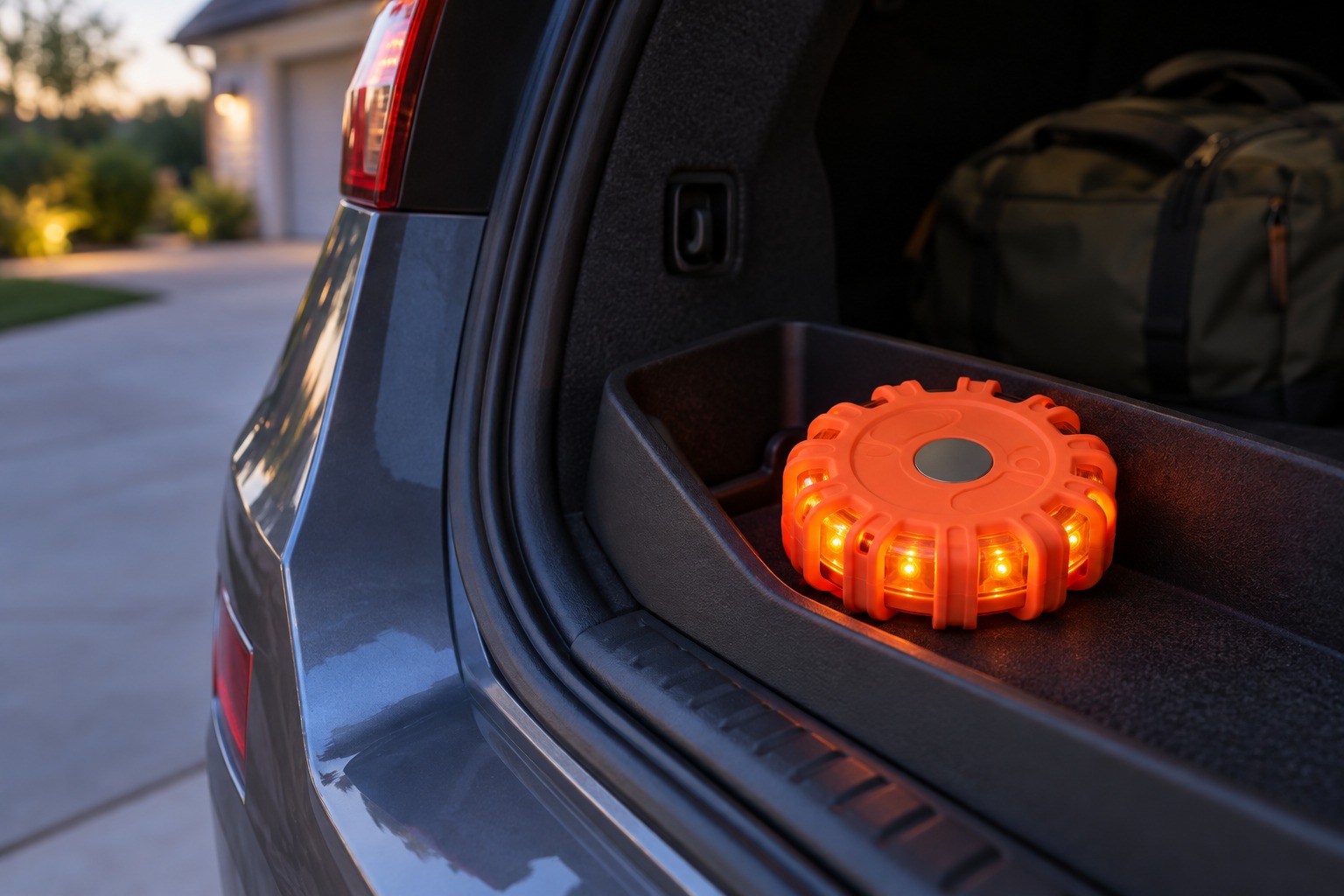
A warning light packed underneath every suitcase may be present in the vehicle but difficult to use when it matters. Give roadside visibility equipment an accessible storage position before a trip, then learn its controls while parked somewhere safe.
The light is only one part of a breakdown plan. It does not make a dangerous shoulder safe, guarantee that approaching drivers will see you or replace calling for help. If a vehicle stops in a hazardous position, prioritize people and follow emergency-service or road-authority instructions.
Choose and store for the actual vehicle
Check what equipment is appropriate and permitted for the places you drive. Battery-powered warning lights, reflective devices and other equipment have different instructions and limitations. Do not assume a product's bright photograph establishes its visibility, weather resistance or allowed use on public roads.
Read the operating and storage instructions. Test the switch, battery indicator and any mounting system in a safe location away from traffic. A magnetic base needs a compatible surface; not every exterior vehicle panel is magnetic. Avoid attaching anything where it could damage a surface or interfere with vehicle operation.
Store the light securely, with its controls protected against accidental activation. Keep it separate from sharp tools and loose metal if its battery arrangement requires that protection. Choose a place that remains accessible when the car is fully loaded, without creating a loose object in the passenger compartment.
Do not let equipment encourage exposure
Plan how you would describe your location to a dispatcher or roadside-assistance provider. Road name, direction of travel, nearby markers and the nature of the problem are useful information. The safest response may be to wait for professional assistance rather than walking along a road to deploy equipment.
If you use a warning device, follow its instructions and the applicable local guidance. This article does not prescribe a universal placement distance because road layout, visibility and rules differ. Avoid standing in a traffic lane or moving into an unsafe position to improve a light's arrangement.
Check the device during seasonal kit reviews and after use. Replace depleted batteries or recharge it as directed, and put it back in its assigned location. A familiar light you can find is more useful than several unfamiliar devices scattered through the trunk.