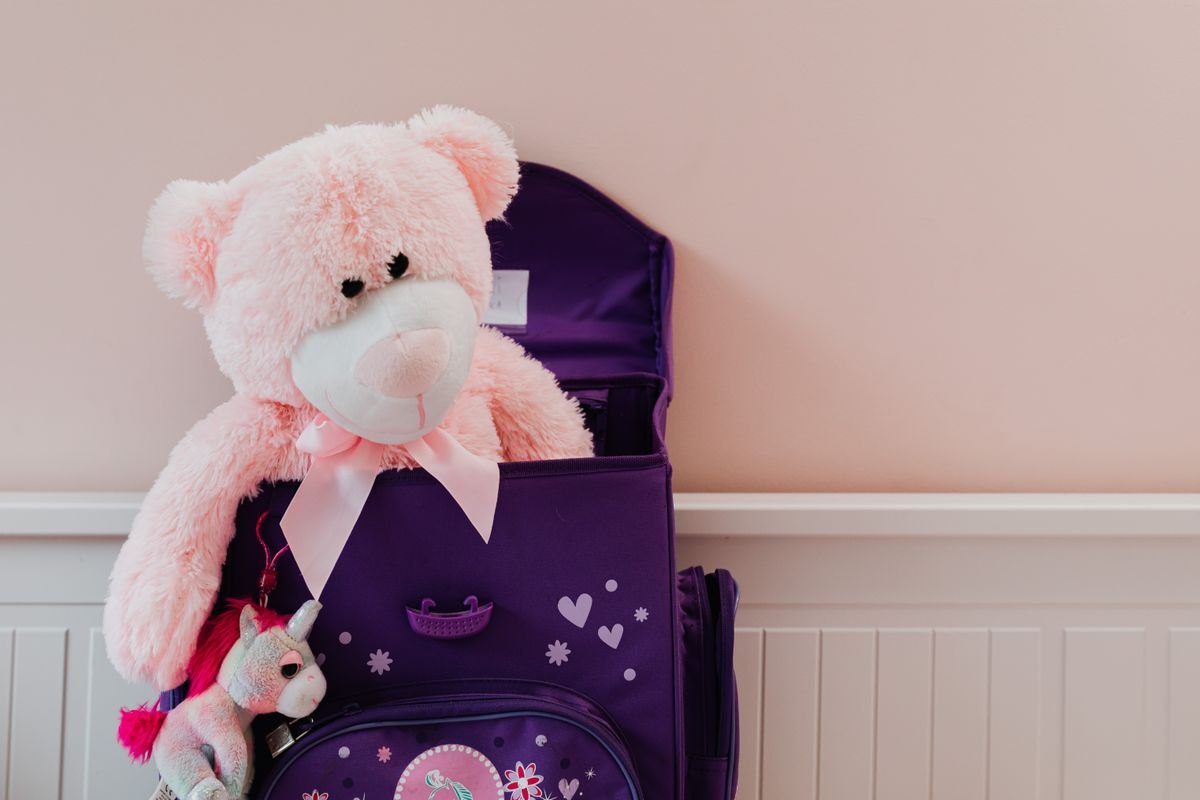
A child’s comfort kit can be very small: a familiar soft toy, a little activity and something that supports the usual routine. The point is recognition. A collection of new “emergency toys” may be less useful than a well-loved item the child already knows how to enjoy.
Invite the child to help choose within a clear size limit. For a younger child, offer two suitable options. For an older one, ask what would make waiting in an unfamiliar place easier. Avoid presenting the kit as a promise that they will never feel worried.
Choose items that work where you may go
Quiet activities are easier to use in shared accommodation. A small notebook, crayons or a familiar book can work without charging. Check for age-appropriate parts and avoid loose pieces that are easy to lose or unsuitable around younger children.
Consider sensory needs and the child’s normal preferences. An unfamiliar blanket texture or noisy toy may not be comforting. If a duplicate of a favorite item is appropriate, let it become familiar before packing it away. Do not assume every child will accept a substitute for a cherished original.
Keep care items distinct
Clothes, feeding supplies and prescribed medical items belong in the broader household plan. A comfort pouch should not be expected to hold or replace everything a child needs. Any medicines must remain secured and managed by the responsible adult.
Check the kit as the child grows. Clothes and activities can become unsuitable long before packaging looks old. Replace used supplies and remove items the child no longer wants, keeping the kit easy to carry.
Explain it calmly
Tell the child the kit is for times when plans change and the family may need to wait or stay somewhere else. Answer questions in understandable language without elaborate disaster scenarios. CDC guidance emphasizes listening to children and giving honest, age-appropriate explanations.
During a disruption, the presence and reassurance of a trusted adult matter more than the contents of the pouch. Use familiar routines when possible and allow the child to express feelings. The kit supports those interactions; it is not a treatment for distress or a test of whether the child is coping correctly.