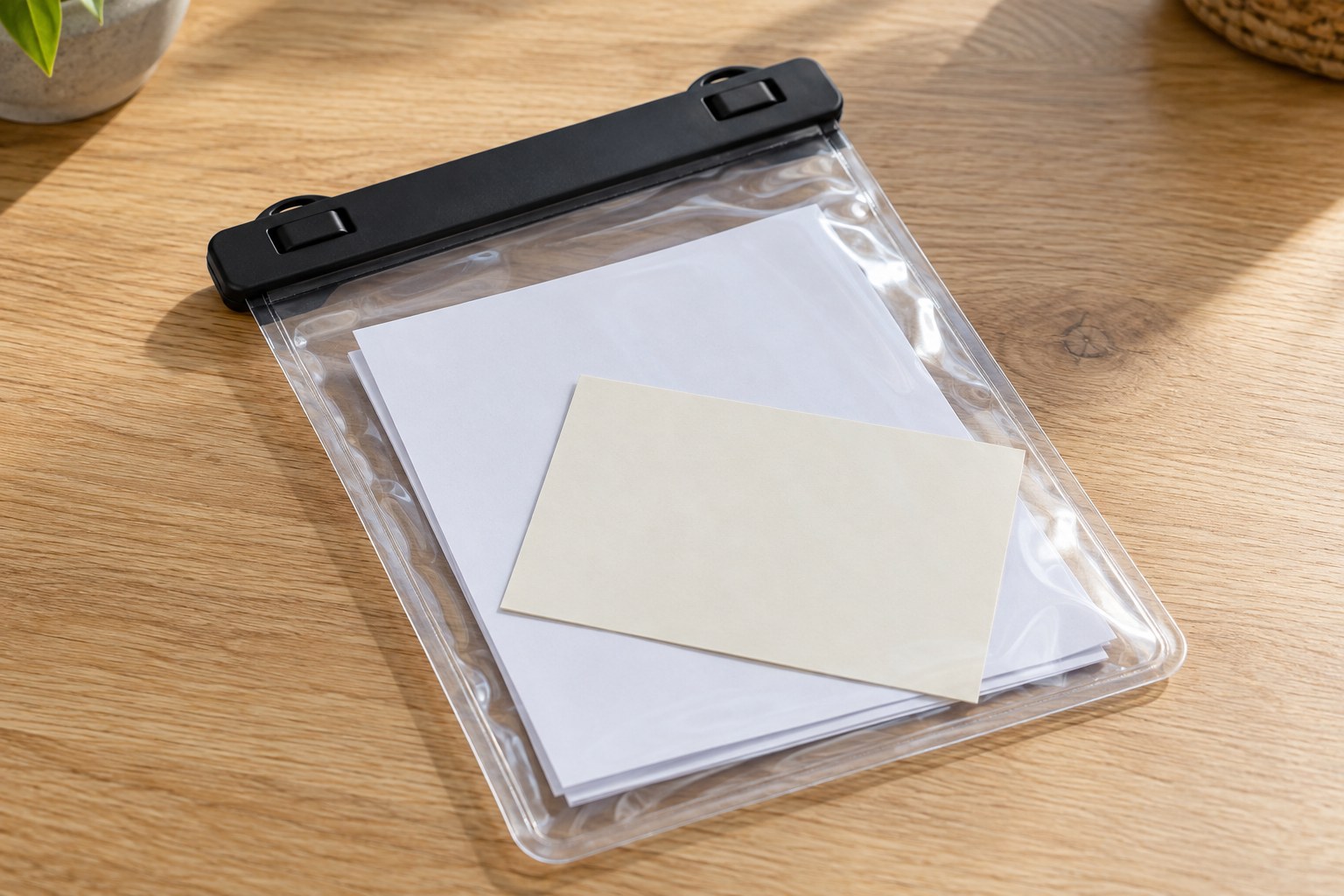
A waterproof document pouch is a layer of protection, not a guarantee that everything inside will survive every flood or fire. Some products resist splashes; others specify particular immersion conditions. Read those conditions before deciding what the pouch can reasonably protect.
Begin with the documents that belong in the departure plan. A few identification copies, essential contact details and relevant care or insurance records may be more useful than a thick stack of unrelated papers. Originals require a deliberate storage decision based on their importance and how they might be used.
Check the closure with harmless contents
Practice opening and closing the pouch according to the instructions. A roll-top closure may need a minimum number of rolls, while a zip seal may require careful alignment. Do not fill the pouch so tightly that the closure cannot work as designed.
If the manufacturer describes a permitted water test, use scrap paper rather than real records. Inspect seams and the closure afterward. Passing a simple test is evidence about that test, not proof of unlimited protection. Do not assume a water-resistant pouch is fire-resistant too.
Make retrieval possible
Use a small number of labeled sleeves or groups inside. Check that labels remain readable and pages can be removed without tearing. If someone needs a record quickly, a pouch filled with loose folded sheets is awkward even when every page is dry.
Consider the carrier’s dexterity and vision. Tiny interlocking closures or dark interiors can make a well-rated product difficult to use. Try it with the person who is likely to carry it, including any normal glasses or mobility aids.
Protect access as well as paper
Store the pouch securely and maintain a protected backup elsewhere. Physical water protection does nothing to prevent identity theft if the pouch is lost. Avoid adding passwords or access codes that would make loss more damaging.
Keep the pouch’s location consistent, and replace outdated records instead of adding endless layers. If evacuation must happen immediately, leave without it. The purpose of copies and backups is to reduce the pressure to retrieve possessions when doing so is unsafe.