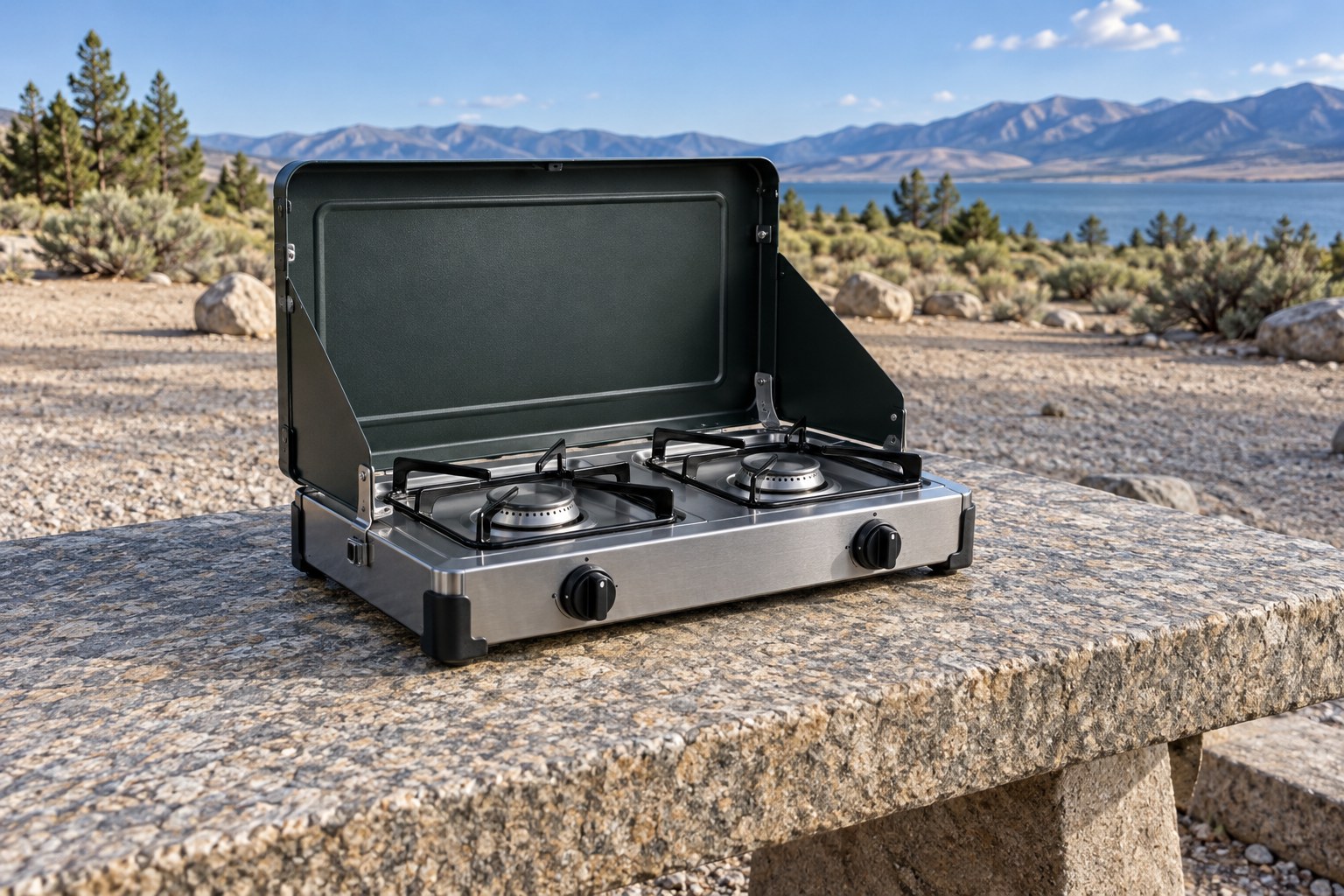
A camp stove can be useful outdoors, but it is not a substitute kitchen appliance during a power outage. Before comparing burners, identify a place where it can be operated according to its instructions and local rules. If that place does not exist, a stove is not the solution for this household.
EPA warns against using unvented combustion cooking appliances indoors. Keep camp stoves and grills outside, away from doors, windows, and air intakes as directed. A garage, tent, or enclosed porch is not made suitable merely by opening something. Carbon monoxide and fire hazards remain separate from whether the flame appears controlled.
Match the cooking task
Decide what you want to cook and how many people it serves. Boiling water for a small meal is different from balancing a large pot across burners. Check the manufacturer's permitted cookware dimensions and loads. An oversized pot can create stability or overheating problems; do not infer suitability from whether it physically fits.
Look at the controls and ignition method. Can the intended user operate them comfortably and understand when fuel is flowing? Follow the exact lighting and shutdown procedure in the manual. If it requires an accessory, keep the approved item with the stove rather than inventing a substitute later.
Check the fuel requirement and confirm an allowed storage arrangement before buying. Include the cost and availability of compatible fuel, but avoid stocking more than you can lawfully and safely store. A cheap stove using inconvenient fuel may not be the simpler choice.
Plan the surface and surroundings
Use a stable, suitable surface and the clearances specified by the manufacturer. Keep children, pets, and foot traffic away. Think about moving hot cookware back to the eating area; a long route through a crowded doorway can make the setup awkward even when the stove itself is correctly placed.
Do not add an improvised windscreen or enclosure. Some arrangements can reflect heat toward fuel or restrict ventilation. Use only the protection permitted for that stove, and stop cooking if conditions exceed what can be managed safely.
Practice an ordinary meal
Read the manual before the first use and try the stove in safe weather, with normal services still available. Check how long preparation and cleanup take, whether the cookware sits securely, and where everything goes afterward. This is familiarization, not a stress test.
Clean and store the stove as instructed. Keep its manual and model information accessible, along with the household's agreed operating location. If another person may use it, they need the same instructions rather than a secondhand description of which knob to turn.
Finally, keep ready-to-eat meals available. A storm can remove the very outdoor space you planned to use. A reliable food plan must still work when the safest choice is to leave the stove packed away.