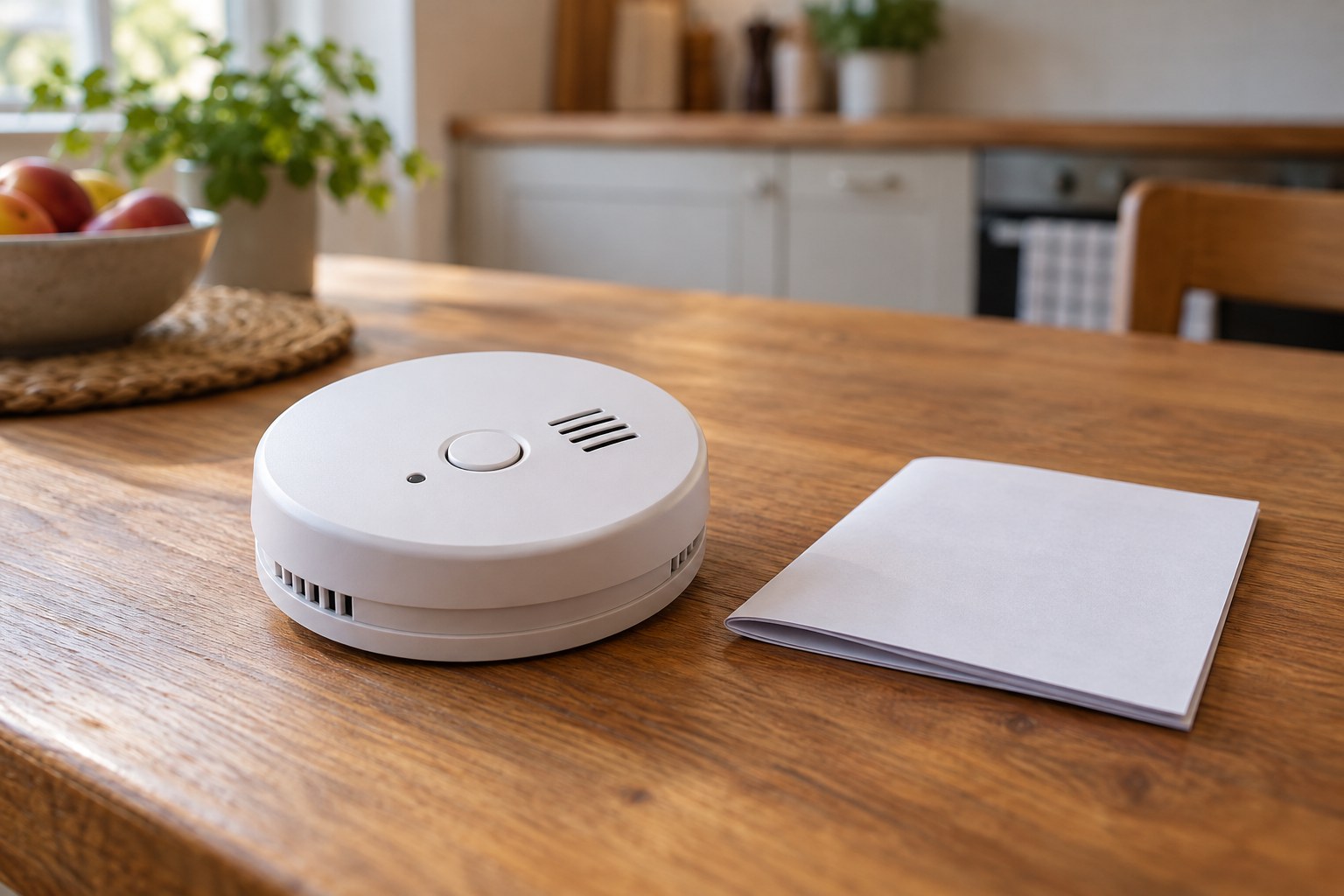
A smoke alarm that has not chirped is not necessarily a smoke alarm that has been checked. Make a small record of the units in the home, including their locations and manufacture dates where available. That record turns an easy-to-forget task into a routine you can verify.
US Fire Administration guidance recommends alarms inside bedrooms, outside sleeping areas and on every level of the home. Check the current requirements for your home and follow each manufacturer’s installation instructions. Interconnected alarms can help warnings reach more of the building when one unit detects smoke.
Test the whole arrangement
Test alarms monthly using the manufacturer’s procedure. Tell household members before a planned test, especially anyone who may be startled by a loud sound. Ask whether the alarm can be perceived from sleeping areas with the usual doors closed.
If someone cannot hear the alarm, look into appropriate accessible alerting equipment rather than simply assuming another household member will wake them. The escape plan should reflect each person’s actual needs.
Record what the alarm needs
Some alarms use replaceable batteries; others have sealed batteries or mains power with backup. Follow the instructions for that model. A hardwired connection does not mean no maintenance is needed, and a sealed unit should not be forced open to replace an internal battery.
USFA advises replacing smoke alarms ten years from their manufacture date. Check the unit and manual, and replace sooner if instructed because of a fault or other condition. Keep replacement information in the household calendar so it does not depend on remembering the installation day years later.
Fix nuisance problems without disabling protection
Use the approved hush function where appropriate and address placement or maintenance issues according to the instructions. Do not permanently remove a battery because cooking often triggers the alarm. If the location seems wrong, seek guidance rather than improvising a move that leaves a sleeping area unprotected.
During a genuine alarm, follow the home escape plan and get outside. A maintenance routine is not a reason to assume the next signal is merely another test. Update the location record after renovations or room changes, and make sure visitors and new household members know the response.